


Last updated on March 31, 2026 6:17 am
Illuminating Architecture, Advancing Sustainability and Designing with Intention
Architectural lighting design is always evolving. Over forty years, the industry has been shaped by energy crises, mandates, technology, codes, digital platforms and new standards for building performance and ambience.
Few designers have been as close to—and influential in—this evolution as Francesca Bettridge, president and principal of Cline Bettridge Bernstein Lighting Design in New York City.

Bettridge’s body of work spans commercial towers, landmarks, venues and institutions. Bettridge’s portfolio of projects includes some of the world’s first LEED-certified high-rise projects. She has worked with renowned architects, navigated early LED lighting innovations and helped define sustainable lighting long before it became the industry standard.
What distinguishes her perspective is focus and clarity. In conversation, she returns again and again to principles—materials, surfaces, human experience, collaboration, responsibility. For her, lighting is never an afterthought; it is an instrument that reveals and enhances architecture and shapes how people experience work, life and spaces.
Writer, architect and Alcon Lighting Insights and Language of Lighting contributor Murrye Bernard spoke with Francesca Bettridge about her formative influences, early approaches to sustainability, the industry’s transition to LED technology, the realities of large-scale commercial projects, and what will shape premium lighting in the decade ahead.
You’ve worked on some of the most iconic commercial and LEED-certified projects in the world. Looking back, what defining moment shaped your approach to lighting design?
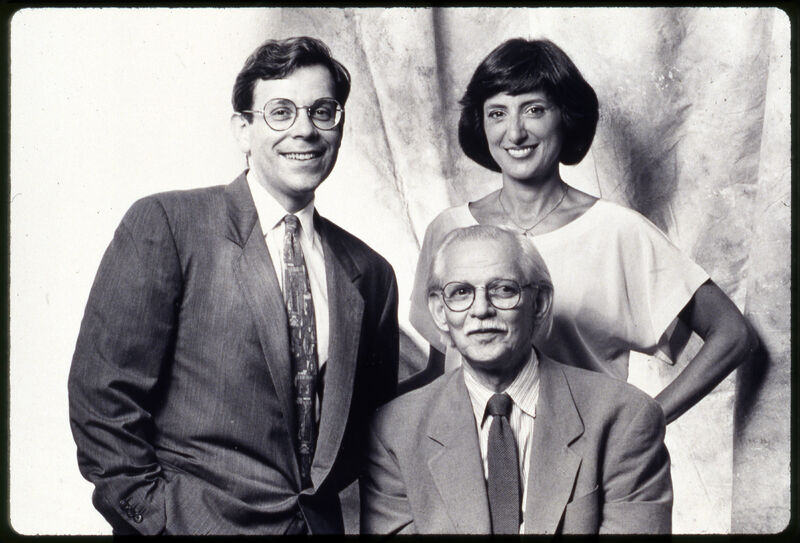
Bettridge: I don’t think a single project shaped me; it was the people I worked with early on. My first partner and mentor, Carroll Cline, had a way of reframing every project before we even began. He would ask, very simply, “What are we lighting?”
That question seems obvious, but it fundamentally changes the approach. Before discussing fixture types, beam spreads or output, you must carefully examine the architecture.
What are the materials? What is their reflectance? How do the surfaces receive light? What is the mood we’re trying to create? What is the hierarchy of the space? Are we illuminating a textured stone façade that wants grazing light? A smooth plaster wall that will glow evenly? A double-height volume that needs vertical emphasis to feel expansive rather than cavernous?
That discipline, beginning with observation, shaped my entire design process.
Another defining experience came while working on Calvin Klein’s apartment on Central Park West. When I asked him what he wanted from the lighting, he said, “I want people to look good.”
That statement has stayed with me throughout my career. It wasn’t superficial. It was about comfort. When people look good, they feel comfortable and confident. The light is flattering. There are no harsh shadows under the eyes. No glare. No uneven skin tones caused by poor color rendering.Even in a corporate lobby or a concert hall, this principle holds true. Lighting shapes how people feel about themselves in a space. It supports interaction and affects perception.
The awareness that lighting is fundamentally human has guided me more than any technical milestone.
You were involved in early LEED milestones. How has sustainable lighting design evolved since those early projects?
Bettridge: Sustainable design practices emerged during the energy crisis of the 80’s and the push for energy codes, which, in turn, spurred the development of new technologies.
It was the owners and architects who issued the directive to meet reduced energy needs and costs, and this was made possible by the use of more efficient, better-colored fluorescents, MR16s and, of course, LEDs.
The lighting designer collaborates to ensure finishes reflect light, decides what we want to light and understands the importance of low-brightness fixtures, dimming controls and visual comfort.
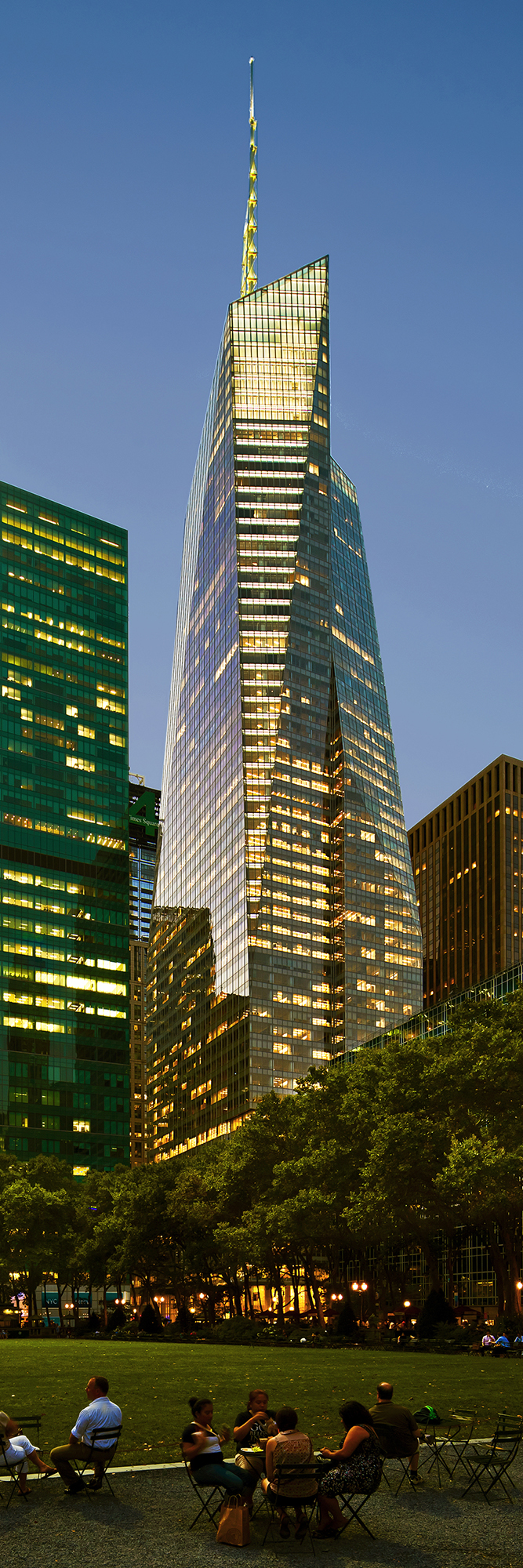
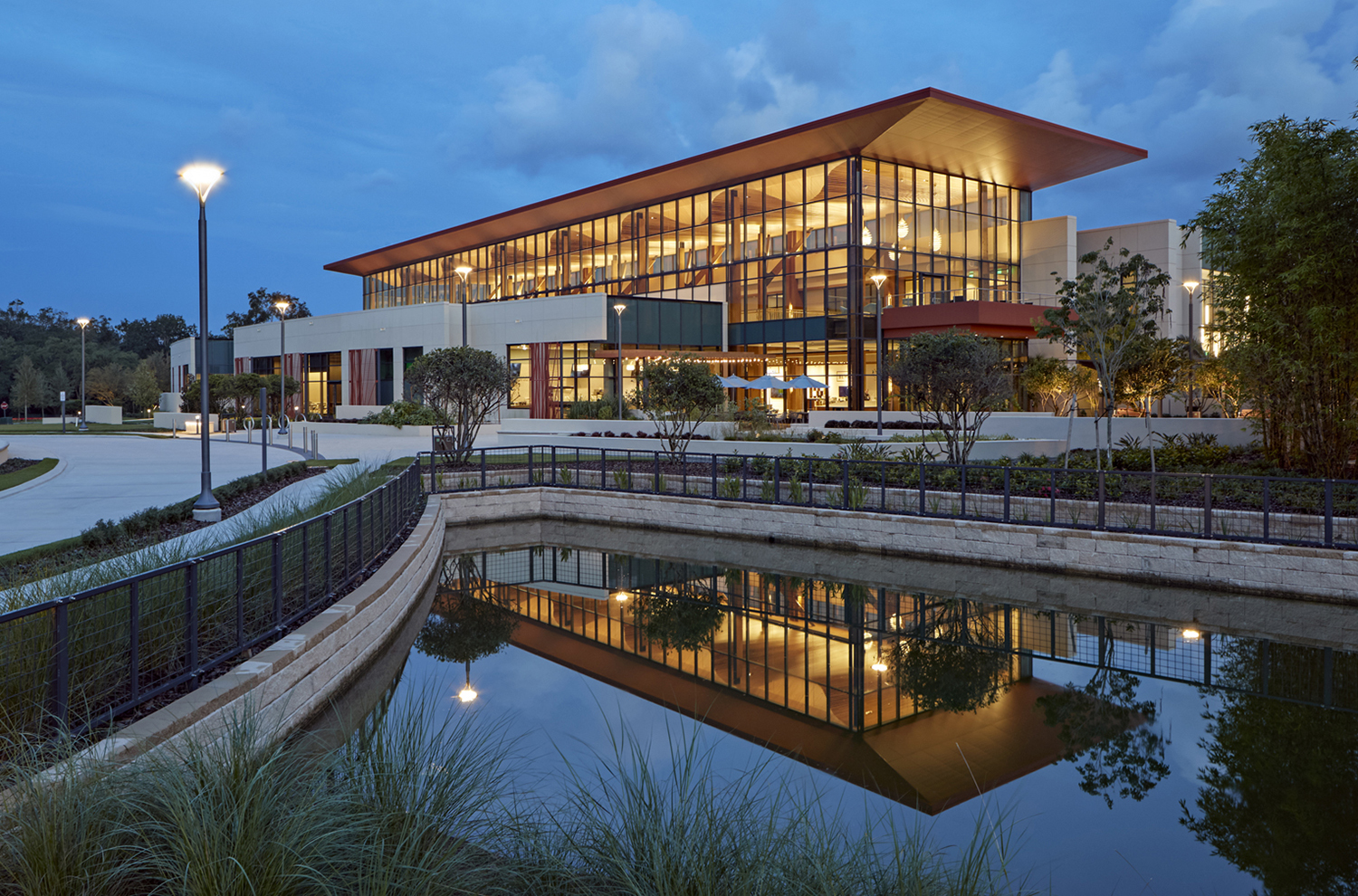
Platinum LEED-certified projects, such as Bank of America, Torre Iberdrola and the Emory Student Center, all benefited from the new LEDs, the vision and collaboration with the architects and the owners.
Today, LEDs allow us to achieve performance levels that were unimaginable decades ago, with a fraction of the energy use. Sustainable lighting design is no longer a separate category. It is embedded in every decision, from fixture selection to control strategy to documentation. What began as a necessity has matured into a responsibility.
In high-performance commercial buildings, how do you balance aggressive energy goals with visual drama and architectural impact?
Bettridge: Again, it is collaboration with talented architects and interior designers, and from that relationship and design perspective, one starts the process.
I don’t think I have ever felt that there is only one good idea, only one solution, and it is my/our job to present a number of meaningful design alternatives, always keeping in mind the energy goals. In the end, the most important ideas and gestures usually prevail—meeting the design intent and conservation goals.
When lighting is incorporated early in the design process rather than added at the end, the building itself can help save energy.
Highlighting vertical surfaces can make spaces seem brighter. Reflective materials can boost light, and using contrast wisely can lower the need for more lighting overall.
Often, the most effective lighting is carefully controlled rather than overdone. Being precise has a bigger impact than using too much. Energy goals don’t limit architectural expression: they help sharpen it.
Can you cite a project in which technical limitations led to an innovative solution?
Bettridge: The Segerstrom Center for the Arts in Costa Mesa, California, remains one of the most instructive experiences of my career.
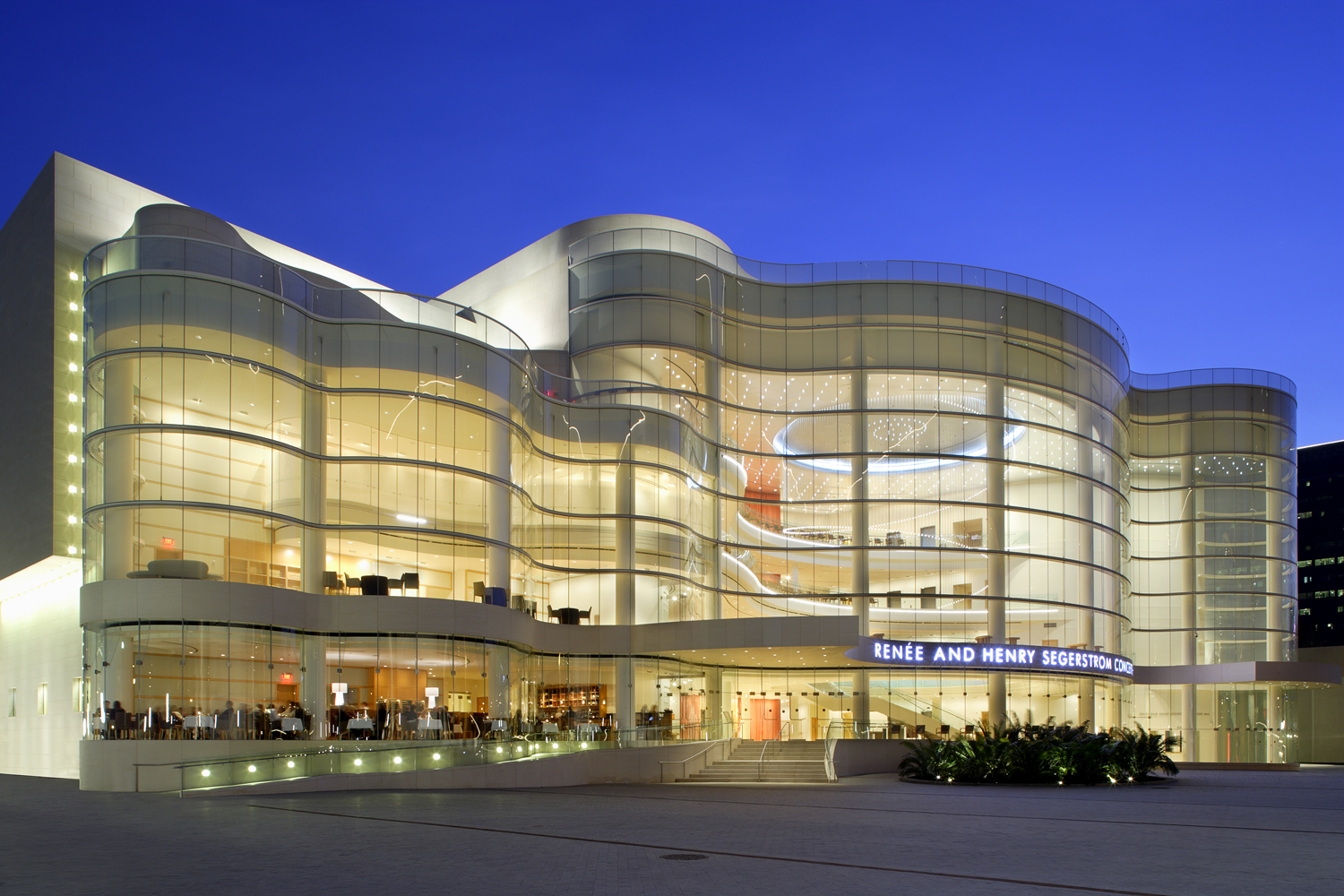
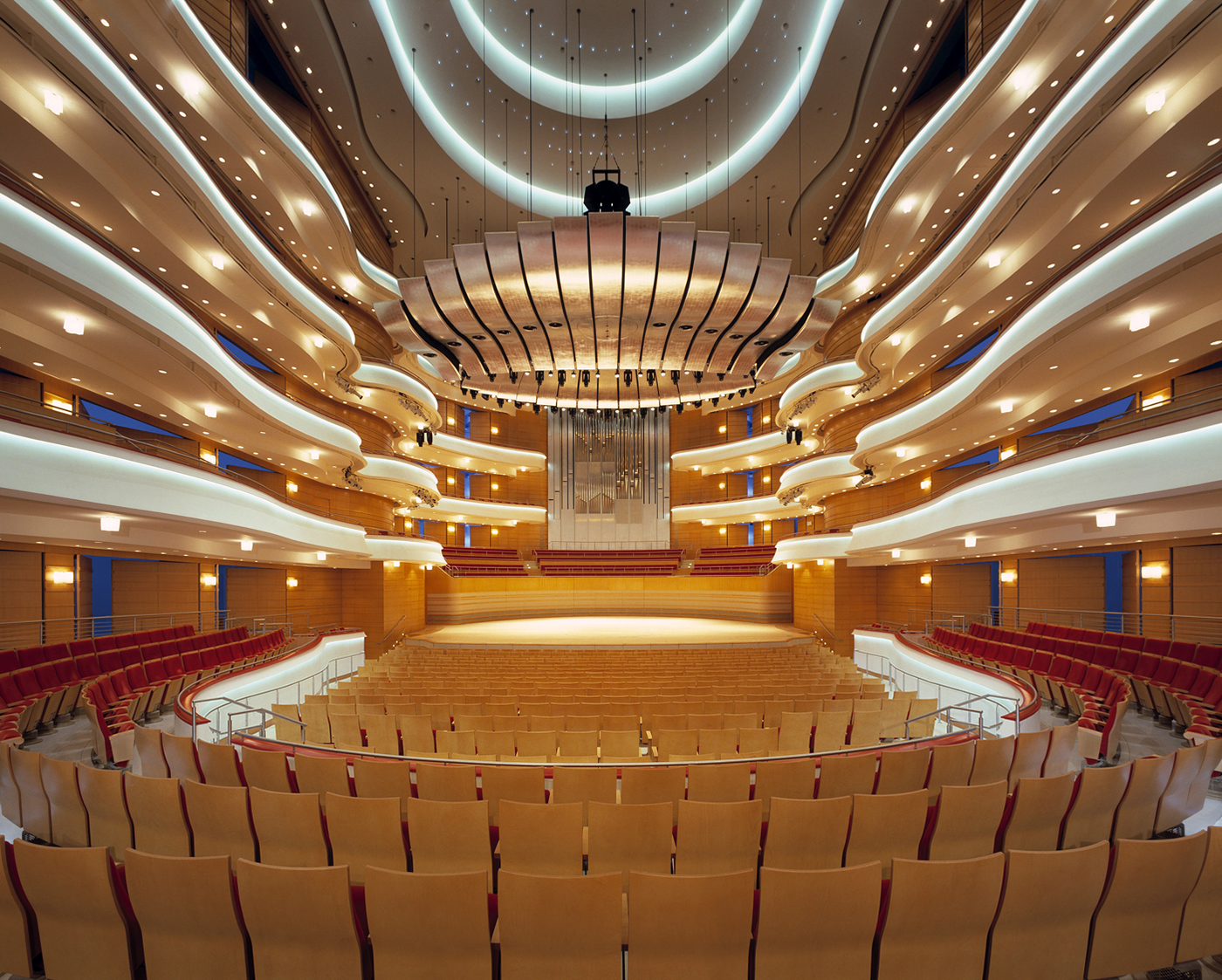
We were designing under California’s Title 24 energy code in 2006—right as LEDs were entering architectural applications. Our design intent was to illuminate the tall balcony fronts throughout the concert hall, creating a rhythmic continuity that reinforced the architecture, but we could never use the watts required from halogen strips.
I knew that we had to try the new LED technology, which required all custom-designed fixtures. So the code really led to innovation. At that time, manufacturers viewed LEDs as low-voltage sources that could be treated the same as other low-voltage sources. Quite a learning curve, but the result was transformative: The balcony fronts achieved the visual continuity we envisioned—with dramatically improved efficiency and longevity.
In hindsight, the code requirement accelerated innovation. It pushed us into the future sooner than comfort would have.
On large commercial towers, how does your approach differ between skyline visibility and the pedestrian experience?
Bettridge: Designing for the skyline is about long-range perception. You’re considering how the building reads from across the city—from neighboring districts, from bridges, from highways. You analyze the surrounding architecture. Is the tower competing visually? Is it part of a cohesive urban composition?
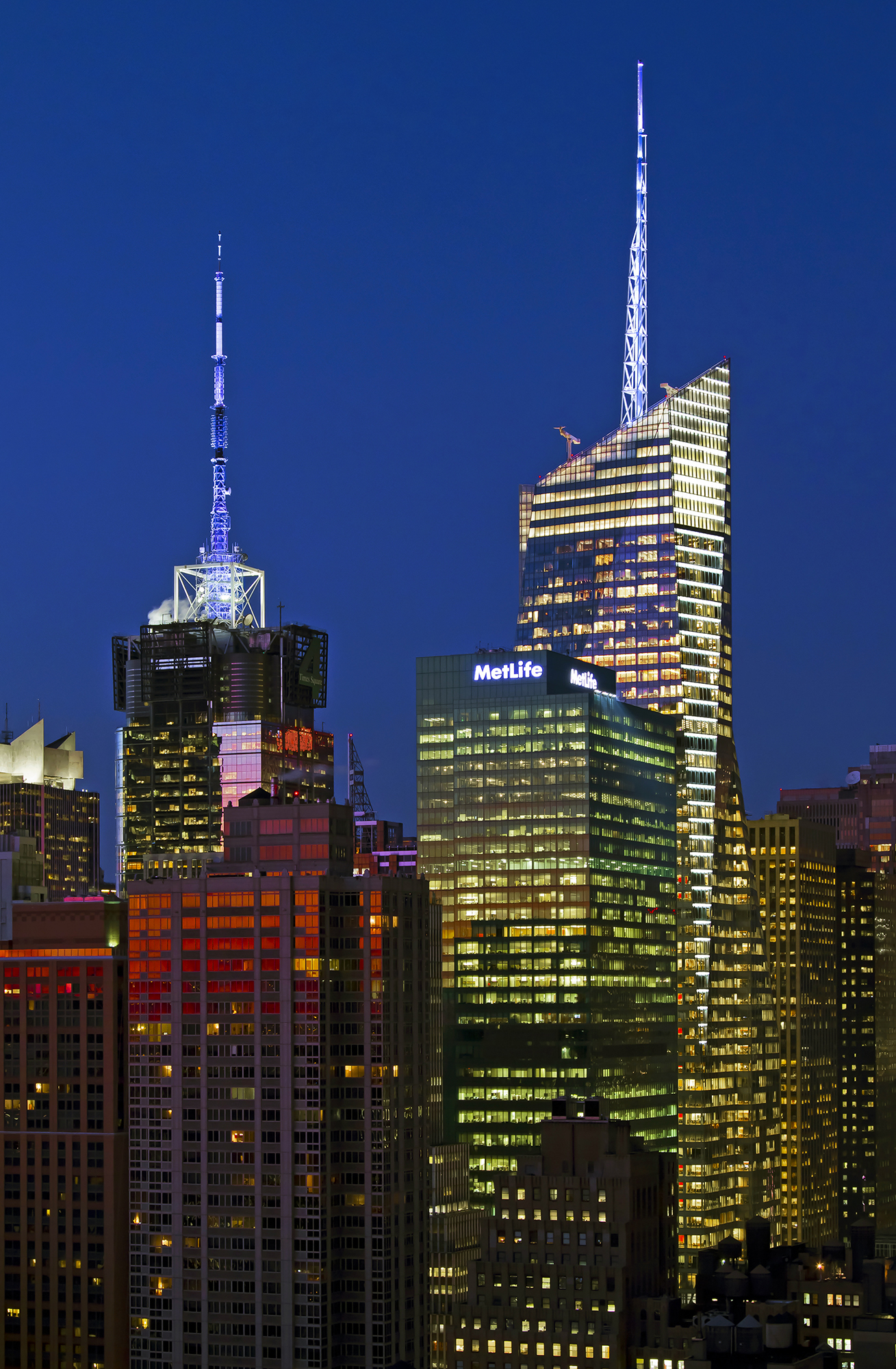
Materials matter deeply. Glass façades present specific challenges related to reflection and glare. Internal illumination must be carefully controlled to avoid creating unintended brightness.
Color-changing systems have become more prevalent, but they must be used with restraint. Just because dynamic color is possible does not mean it is appropriate in every context.
At the pedestrian level, everything shifts. Light levels influence comfort and safety. Wayfinding must be intuitive. The transition from exterior brightness to interior ambience needs to be calibrated to allow the eye to adapt naturally.
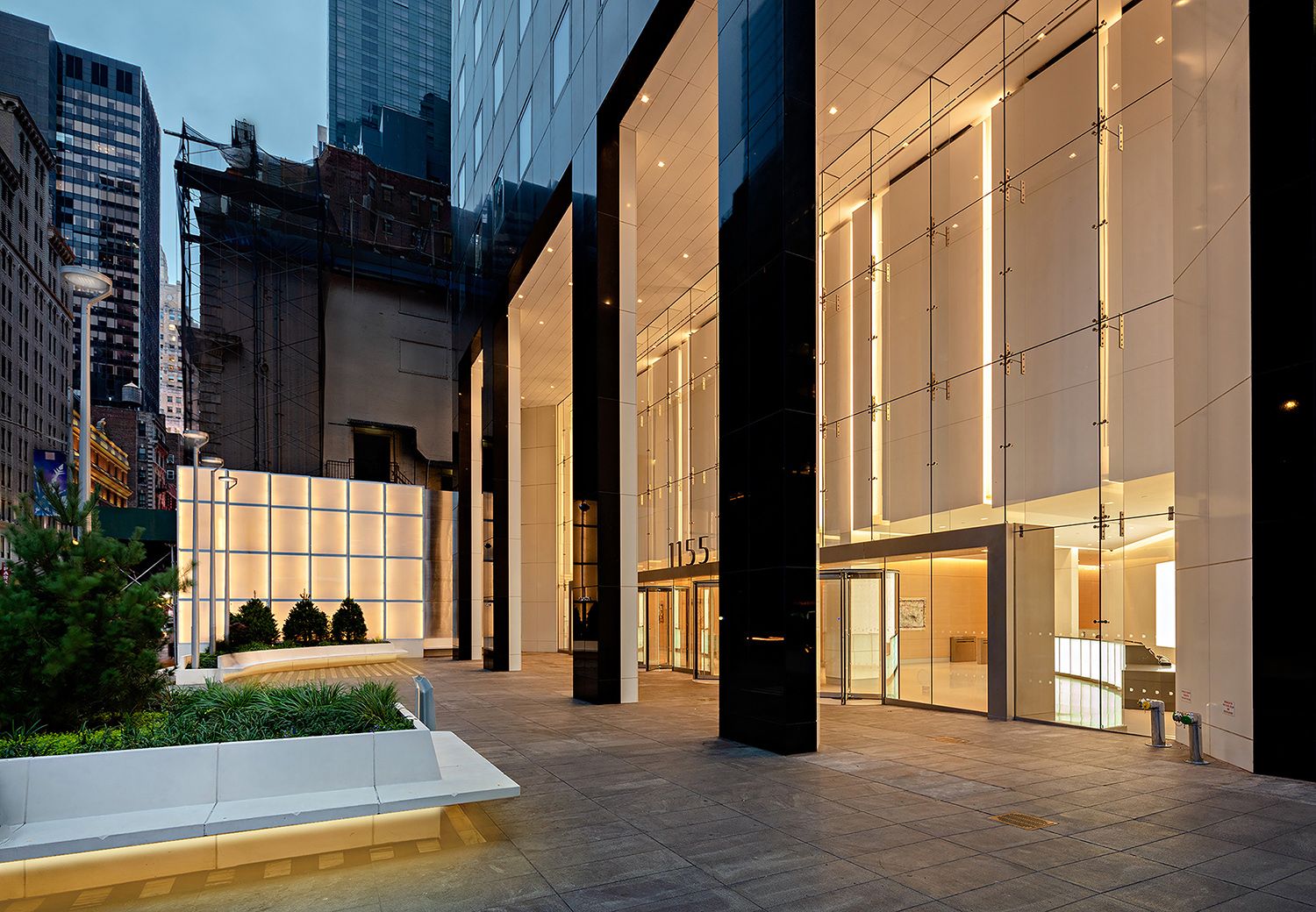
Entrance sequences are particularly important. A transparent façade invites interior light, while a more opaque façade requires layered illumination to create depth and visual interest.
The most successful towers resolve both scales seamlessly—iconic at a distance, human at ground level.
How do you decide when to push a design—and when to hold back?
Bettridge: That balance depends on collaboration and trust. Working with Cesar Pelli and his colleagues on the Segerstrom Center for the Arts is a memorable example. Initially, we were told he did not want a large chandelier in the central circular space. We developed strong renderings that focused on illuminated architectural surfaces.
Still, we prepared an alternative sketch that included a large pendant. When Cesar saw it, he reconsidered and said, “I didn’t think I wanted a large pendant here, but thank you, because now I see that I do.”
The chandelier became a defining element—a 40-foot spiraling sculpture of thin steel rods, each ending in a custom Baccarat crystal, illuminated by a single white LED. It didn’t overwhelm the space. It completed it.
Pushing a design does not mean imposing it. It means offering thoughtful possibilities. Sometimes, restraint is the most elegant choice. Other times, a bold gesture is exactly what the architecture requires. The key is mutual respect.
You’ve seen major shifts from early LEED-era systems to today’s LED and smart controls. What technological advancement has had the most meaningful impact on your workflow?
Bettridge: In terms of the source, it is definitely LEDs. I remember attending a lecture at Cooper Union where a Hewlett-Packard engineer demonstrated an electronic light source. In a dark auditorium, he projected a red beam across the room. I came back to the office and said, “I have seen the future of lighting, and it is called LED.”
But beyond the source itself, controls have had an enormous impact on workflow. Today’s systems integrate daylight harvesting, occupancy sensing, tunable white, programmable scenes and building-wide automation.
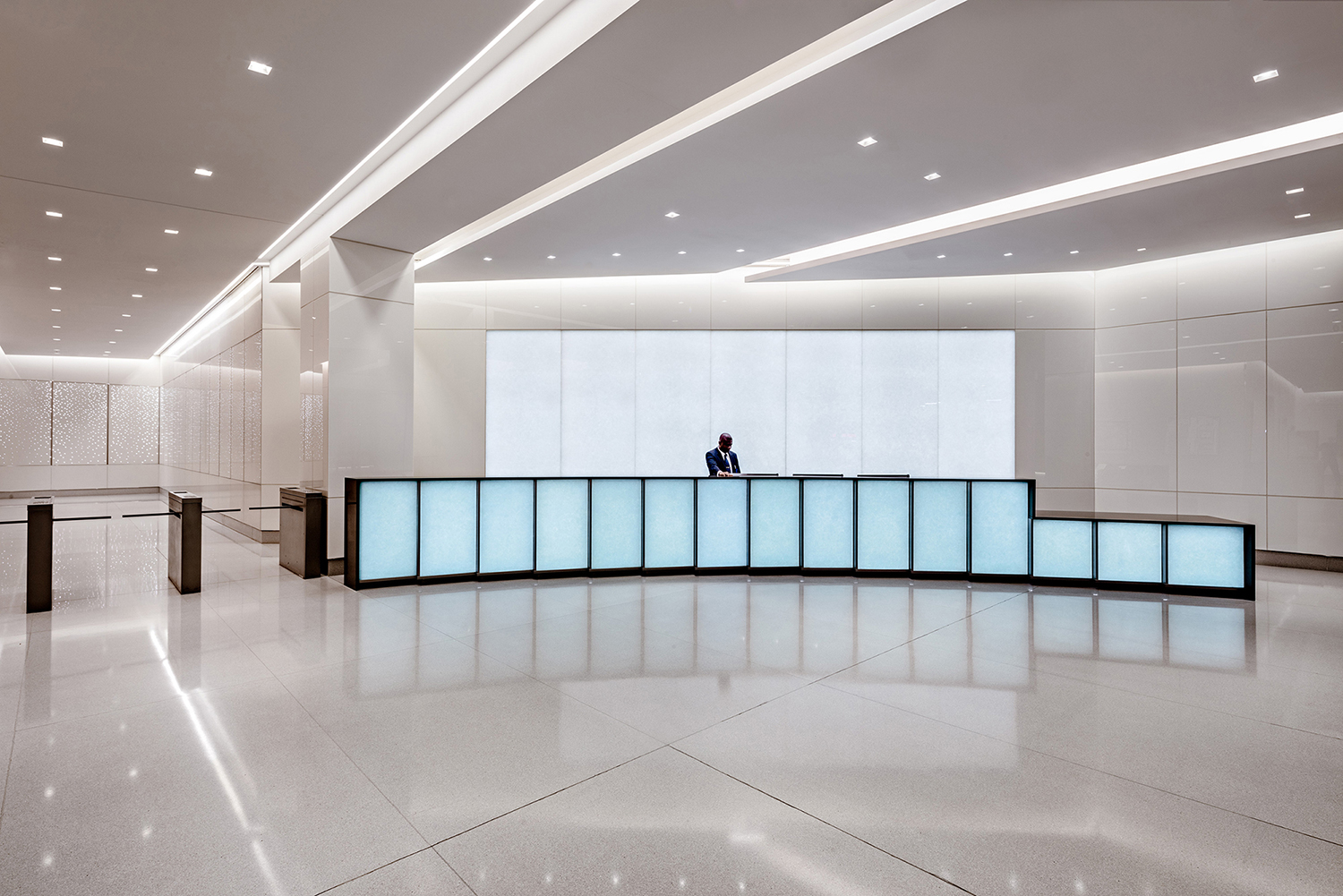
Controls are complex—technically and contractually. Scope definition is critical: Programming responsibilities must be clearly assigned, and documentation must be precise.
Digital modeling tools have also reshaped coordination. AGI photometric analysis allows for more accurate predictions. Revit and BIM integrate lighting design into broader architectural documentation.
Drawings are more detailed and time-intensive than they were decades ago, but the benefits of coordination are significant. Technology has expanded what we can do—and increased the rigor required to do it well.
What does an ideal collaboration between architect and lighting designer look like?
Bettridge: Lighting has the greatest impact during schematic design and early design development. That’s when architectural decisions are still flexible. Then, in the construction documentation and construction administration phases, follow-through and responsiveness are critical.
In an ideal collaboration, the architects and lighting designers are both good listeners, ask the right questions and inspire each other. Sometimes, the architects and owners already have preconceived ideas and renderings of what they want the light to achieve.
For one major tower, the design featured a double-glass façade wall, and the image showed the inter-space with a full diffuse glow. How does one make a diffuse glow between two major walls of glass? I told them that unless they wanted to fill the space with smoke, we needed to work on a different architectural lighting solution. I did say it with a smile.
When evaluating fixtures for large commercial projects, what separates a thoughtfully engineered luminaire from a commodity product?
Bettridge: It really is all in the details and the thoughtfulness the manufacturer has put into the fixtures’ design. What are the end caps like? Are there light leaks? How do the fixtures work in tandem? Is it toolless? How are the fixtures aimed and locked into position? How does it adjust to field conditions?
Knowing and working with the manufacturer is very important.
If there is an installation issue or damage to the fixtures, a problem with the lenses, and a manufacturer’s representative promptly wants to come to the site to work with the contractors and electricians to solve the problem, then I want to use their products. Again, it often comes down to respect, cooperation and communication.
What defines premium commercial lighting for the 2030s?
Bettridge: We will continue to see improvements in efficiency—more lumens per watt, better optical control and greater color consistency across product families.
Cohesive fixture systems will become increasingly important: a family of fixtures with matching apertures, providing more efficient fixtures that use fewer watts and deliver more lumens.
Color consistency across a line is really crucial, and offering tunable white that ranges from dim to warm, and a fuller range of colors beyond RGB, RGBW, RGBWA, etc. There is an increasingly strong shift toward more sustainable goals, such as cradle-to-cradle. How does one recycle what goes into landfills?
It is becoming an economic imperative to care for the environment in everything we do.
Interview ends.
What endures isn’t the technology, but the way Bettridge returns everything to people; how they see, how they feel and how they move through space. Her work reminds us that lighting is not just about visibility, but about care, an attentiveness to materials, to context and to human presence. Across decades of change, that quiet discipline has remained constant, even as the tools have evolved. It is a way of working that values listening as much as designing, and restraint as much as expression.

Great Article!
Cline Bettridge Bernstein Lighting Design are wonderful to work with as well!