
Last updated on August 4, 2026 3:08 pm
In the evolving landscape of commercial architecture and interior design, sustainability and occupant well-being are no longer optional, they’re imperatives. Certifications like LEED (Leadership in Energy and Environmental Design) and WELL Building Standard have become benchmarks for creating high-performance, eco-friendly, human-centric spaces.
For architects, interior designers and lighting designers, lighting plays a pivotal role in achieving these certifications while balancing aesthetics, functionality and energy efficiency. We’ll explore some sustainable lighting solutions tailored for commercial buildings aiming for LEED and WELL certification, offering practical insights for professionals.
The role of lighting in LEED and WELL certification
LEED, developed by the U.S. Green Building Council (USGBC), emphasizes environmental performance, energy efficiency and sustainable site development. WELL, created by the International WELL Building Institute (IWBI), focuses on human health and well-being, addressing factors such as light quality, circadian rhythm support and occupant comfort. Both certifications award points for lighting strategies that reduce energy consumption, enhance the occupant experience and minimize environmental impact.
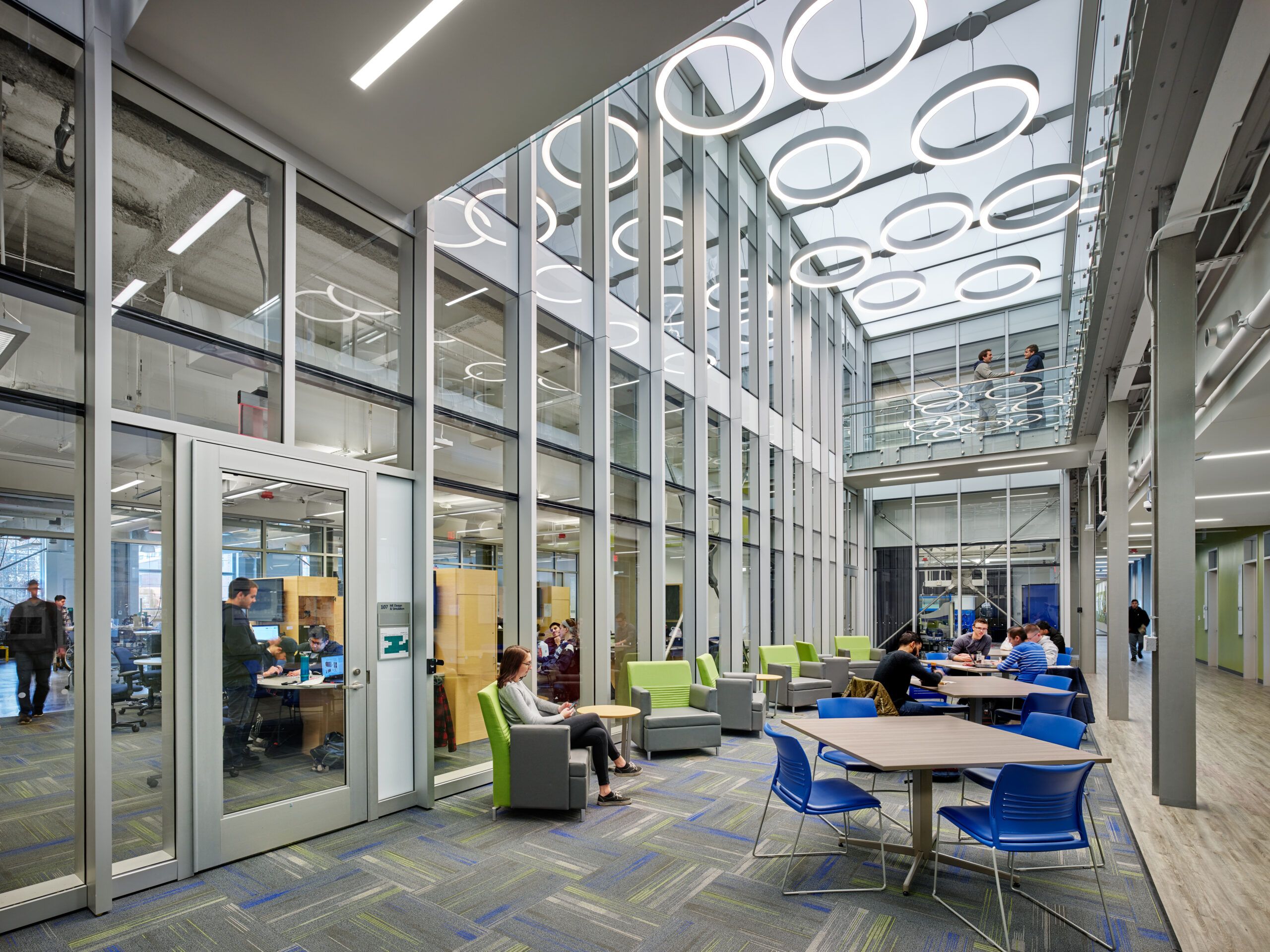
Lighting can contribute to LEED goals related to energy performance, occupant experience and environmental quality. Applicable credits and requirements vary by rating system and version, including LEED v5, LEED v4.1 and LEED v4. In WELL v2, lighting is addressed under the Light concept through features related to circadian lighting design, visual comfort, glare control and access to daylight.
Key principles of sustainable lighting design
Sustainable lighting for LEED and WELL certification focuses on three main principles: energy efficiency, human-centric design and environmental responsibility. The following points explore how these principles translate into actionable strategies for designers of commercial projects:
1. Energy-efficient lighting technologies
Energy efficiency is central to LEED’s energy-performance goals and complements WELL strategies related to lighting quality, controls and occupant experience. Here are a few newer technologies that help to minimize energy use without compromising performance:
- LED lighting: Light-emitting diodes (LEDs) are the gold standard for energy-efficient lighting. Compared to traditional incandescent or fluorescent lamps, LEDs consume up to 80% less energy, have lifespans exceeding 50,000 hours and offer superior controllability. For LEED, specifying high-efficacy LEDs (measured in lumens per watt) contributes to energy optimization credits. For WELL, LEDs with tunable color temperatures support circadian lighting requirements.
- Smart controls and sensors: Integrating occupancy sensors, daylight harvesting systems and time-based controls maximizes energy savings. For example, daylight-responsive controls adjust artificial lighting based on natural light levels, reducing energy use in perimeter zones. These systems can reduce lighting energy use under LEED and support WELL strategies related to daylight response and occupant lighting control.
- Luminaire design: Opt for luminaires with high optical efficiency and low embodied carbon. Modular designs that allow for easy upgrades or recycling reduce waste, supporting LEED’s Materials and Resources (MR) credits.
2. Human-centric lighting for WELL certification
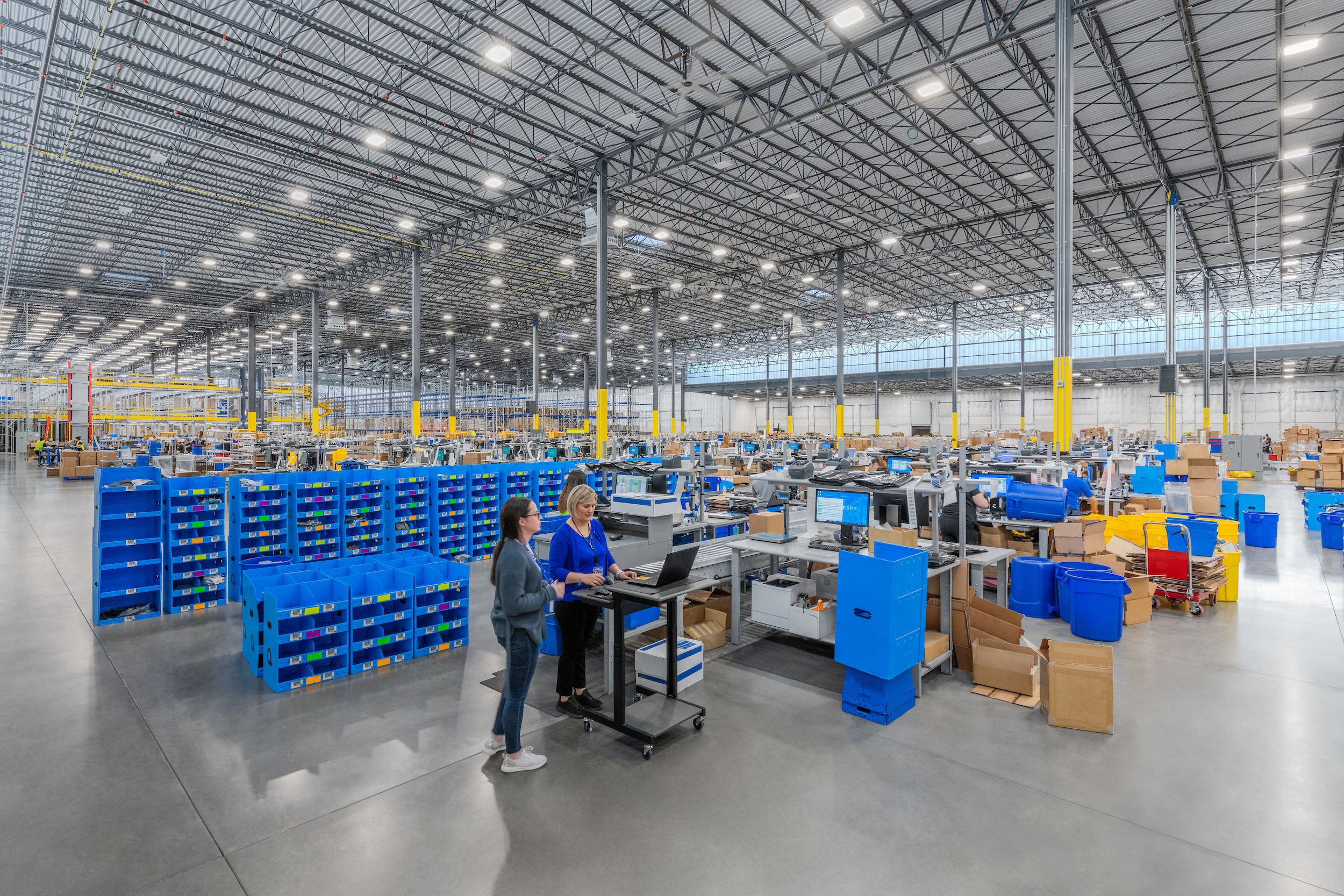
WELL’s Light concept emphasizes lighting that supports human health, particularly through circadian rhythm alignment and visual comfort. Human-centric lighting (HCL) mimics natural daylight patterns, enhancing mood, productivity and sleep quality.
- Circadian lighting design: WELL’s Feature L03 requires lighting that delivers melanopic lux—light that influences the body’s circadian system. Tunable white systems, which adjust color temperature from warm (2700K) to cool (6500K) throughout the day, can support circadian lighting strategies when their spectral output, intensity, timing and vertical illumination are designed to meet the project’s applicable WELL targets. For example, a workplace might use cooler light in the morning to promote alertness and warmer light in the afternoon to support relaxation.
- Glare control and visual comfort: WELL Feature L04 addresses electric light glare control, requiring strategies such as low-glare luminaires, appropriate shielding and proper fixture placement.
- Access to daylight: Both LEED and WELL prioritize daylighting to reduce reliance on artificial light and enhance occupant well-being. Strategies include optimizing window placement and glazing area, using light shelves and specifying low-E glazing to manage heat gain while maintaining visible light transmission.
3. Sustainable materials and lifecycle considerations
LEED’s Materials and Resources credits apply to the use of environmentally responsible products, while WELL emphasizes low-toxicity materials to improve occupant health. Lighting designers can contribute by selecting sustainable fixtures and considering their lifecycle impact.
- Low-embodied carbon materials: Choose luminaires with verified lower-impact materials or product-specific environmental documentation. Recycled content and recyclable materials such as aluminum or glass may support project goals, but their impact depends on manufacturing, sourcing and end-of-life pathways.
- Cradle-to-Cradle design: Specify fixtures designed for disassembly and recycling. Modular LEDs, with components like drivers or light engines that can be replaced, extend product life and reduce waste.
- Responsible sourcing: Depending on the applicable LEED version and credit pathway, EPDs, material ingredient disclosures, responsible sourcing documentation and product location may contribute to Materials and Resources calculations. WELL encourages transparency in material ingredients through Health Product Declarations (HPDs).
Practical strategies for implementation
To successfully integrate sustainable lighting into LEED and WELL projects, designers must adopt a holistic approach that spans planning, specification and commissioning. These are practical steps to guide the process:
- Conduct a lighting audit: Begin with a site analysis to assess natural light availability, occupancy patterns and energy baselines. Consult resources, such as the IES Lighting Library and WELL’s Lighting Simulation Guidelines, when establishing performance targets.
- Leverage integrated design: Collaborate with architects, mechanical engineers and sustainability consultants early in the design phase. For example, coordinating lighting with HVAC systems can optimize energy use, as reduced lighting loads lower cooling demands.
- Specify performance metrics: Use standards like ASHRAE 90.1 for energy benchmarks and WELL’s melanopic lux requirements for circadian lighting. Tools like DIALux or AGi32 can simulate lighting performance and evaluate the design against project criteria.
- Engage occupants: WELL encourages occupant control over lighting environments. By incorporating personal dimming controls or task lighting, user satisfaction can be greatly enhanced.
- Commission and monitor: Building management systems (BMS) help maintain efficiency and identify maintenance needs, ensuring lighting systems perform as they were designed.
Challenges and solutions
Despite the benefits, implementing sustainable lighting for LEED and WELL certification presents specific challenges:
- Cost constraints: High-efficacy LEDs and smart controls can have higher upfront costs. Solution: Highlight long-term savings through reduced energy use and lower maintenance costs. Utility rebates for energy-efficient lighting can also offset expenses.
- Balancing aesthetics and performance: Designers may find it challenging to align sustainable fixture choices with their aesthetic goals for a space. Solution: Explore customizable LED solutions that offer design flexibility without sacrificing efficiency.
- Complex certification requirements: There’s no way around it: Navigating LEED and WELL’s technical criteria can be daunting. Solution: Engage a lighting consultant with expertise in these standards to help streamline the design process and ensure compliance.
Emerging trends in sustainable lighting
The lighting industry is always evolving, which means near-constant advancements in technology and sustainable features. Emerging trends include:
- Li-Fi technology: Light-based communication systems transmit data through modulated LED light and may offer specialized connectivity where radio-frequency communication is limited.
- Biophilic lighting: Lighting that responds to daylight and reinforces natural patterns can complement broader biophilic design strategies.
- Low-carbon lighting: High-efficacy luminaires, responsive controls, renewable-energy coordination and products with documented material impacts can reduce lighting-related operational and embodied carbon.
Conclusion
Sustainable lighting can support LEED and WELL certification goals for commercial projects. By prioritizing energy-efficient technologies, human-centric design and environmentally responsible materials, architects, interior designers and lighting designers can create spaces that are both eco-friendly and occupant-focused. Through integrated design, careful specification and ongoing monitoring, project teams can navigate the complexities of certification while delivering visually stunning, high-performance environments.