

Last updated on April 21, 2026 11:51 am
The Continental Congress passed an act establishing an official flag for the new American republic on June 14, 1777, stating “…that the flag of the United States be thirteen stripes, alternate red and white; that the union be thirteen stars, white in a blue field, representing a new constellation.” On August 3, 1949, President Truman declared June 14 Flag Day. Historians believe the first American flag was designed by New Jersey Congressman Francis Hopkinson and sewn by Philadelphia seamstress Betsy Ross, though this is a matter of some dispute.
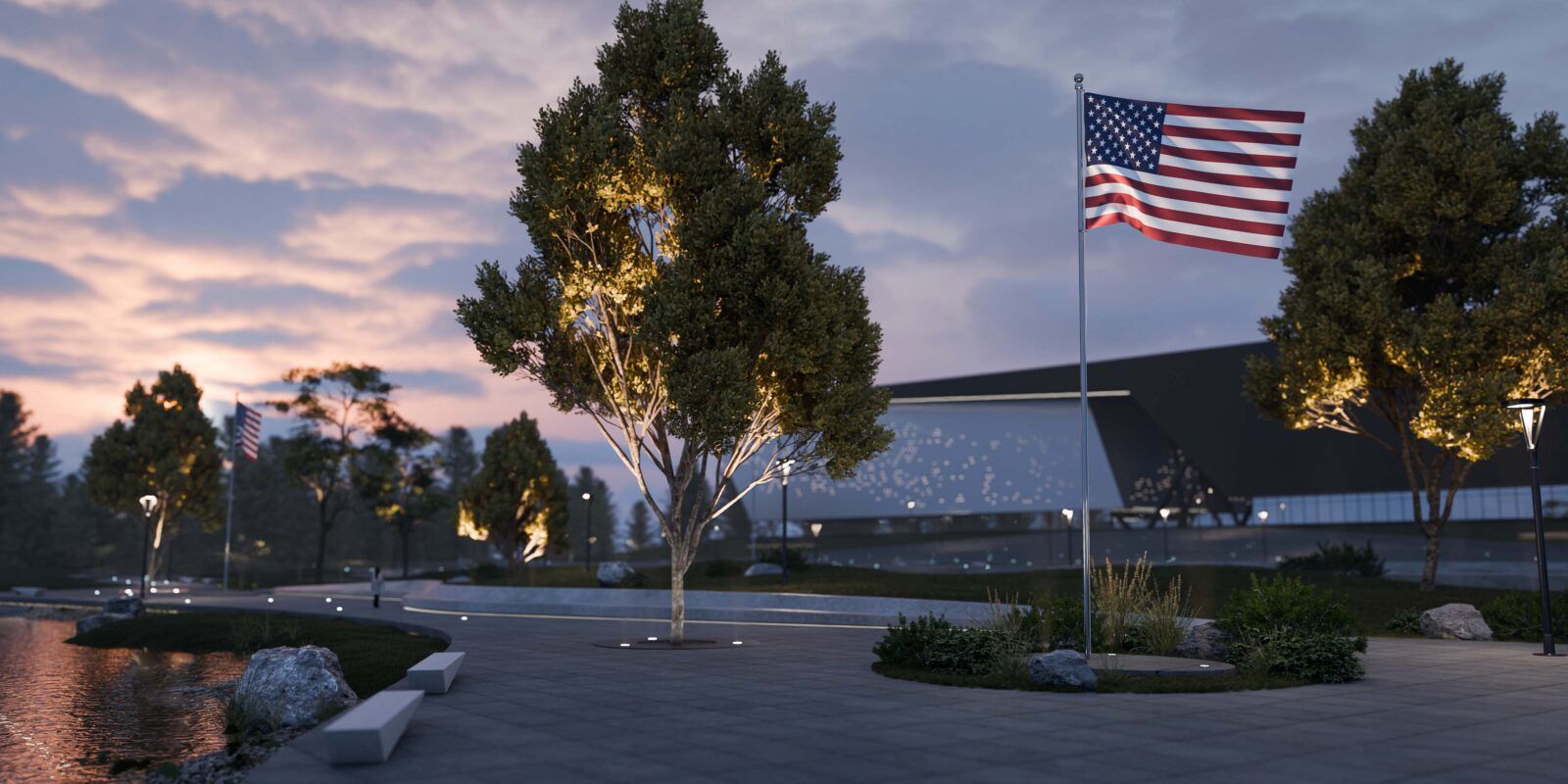
Anyone displaying the American flag after sunset should review these guidelines for proper illumination and fixture placement.
American flag lighting tips
Generally, when darkness makes it necessary, it’s best to illuminate the American flag with light fixtures that use the appropriate beam spread. Depending on the distance, LED narrow or medium-angle flood lights account for the flag’s movement in the wind.
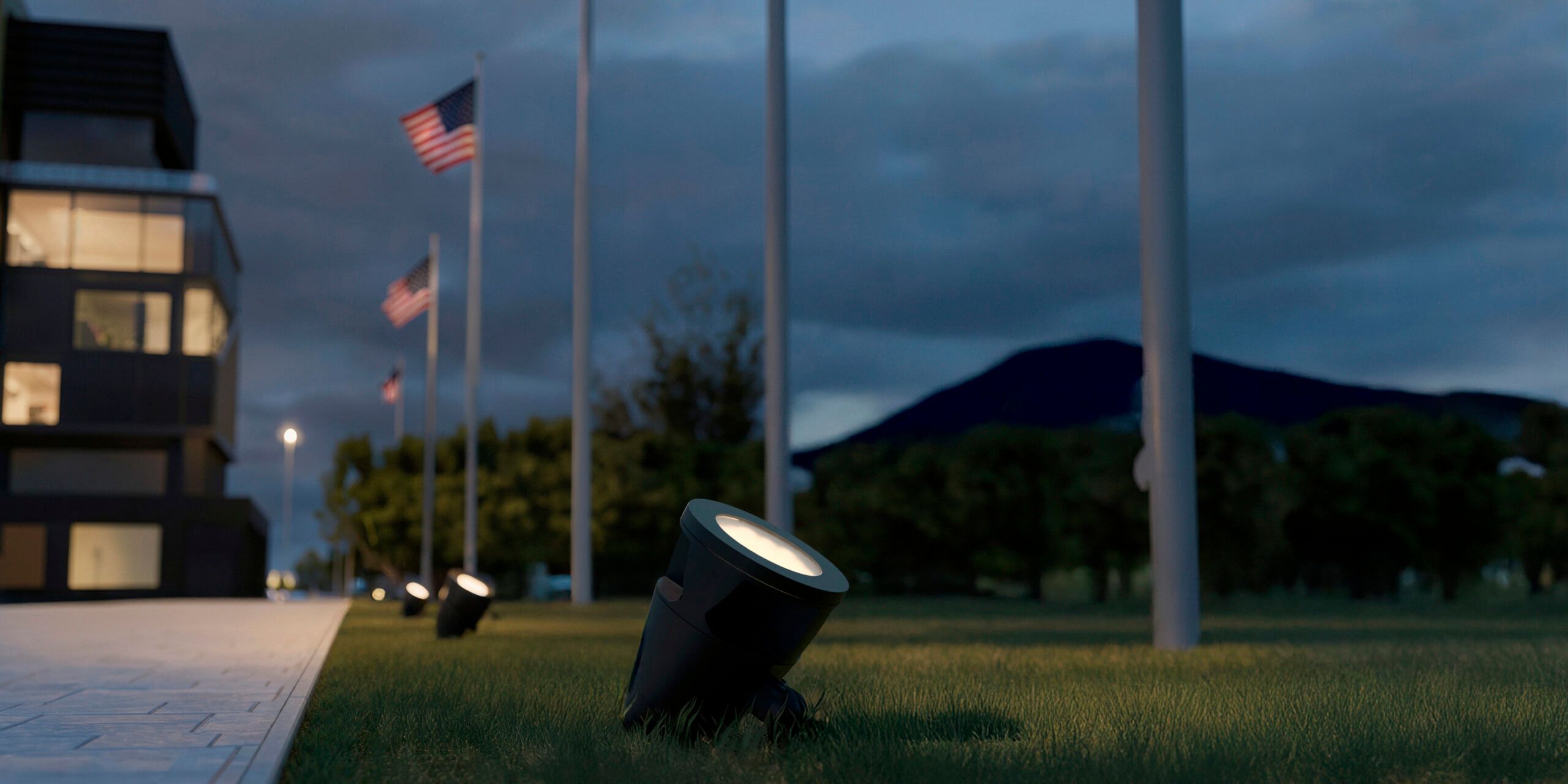
While flood lights have a variety of applications, outdoor fixtures with focused beam spreads for flag lighting may also be called spot lights or landscape lights. Using light fixtures with appropriate beam spreads provides more illumination while mitigating light pollution. Specifying flood lights with glare shielding or snoots can also help minimize light spill.
Whether hanging a U.S. flag on a front porch bracket, which is common for residential display, or hoisting or displaying the flag on a commercial or residential property flagstaff, the flag ought to be properly lighted after sundown. The alternative is withdrawing the flag from display.
According to the U.S. Flag Code, as the law passed by Congress in 1942 came to be known, America’s flag should be displayed at dawn and lowered or removed at dusk if it is not illuminated.
Fixture quantity and placement guidelines
Those choosing to display the flag at night should consider using two or more lighting fixtures, depending on the flag’s size and the height of the flagstaff or pole. When the flag is mounted above 20 feet, three fixtures provide optimal illumination.
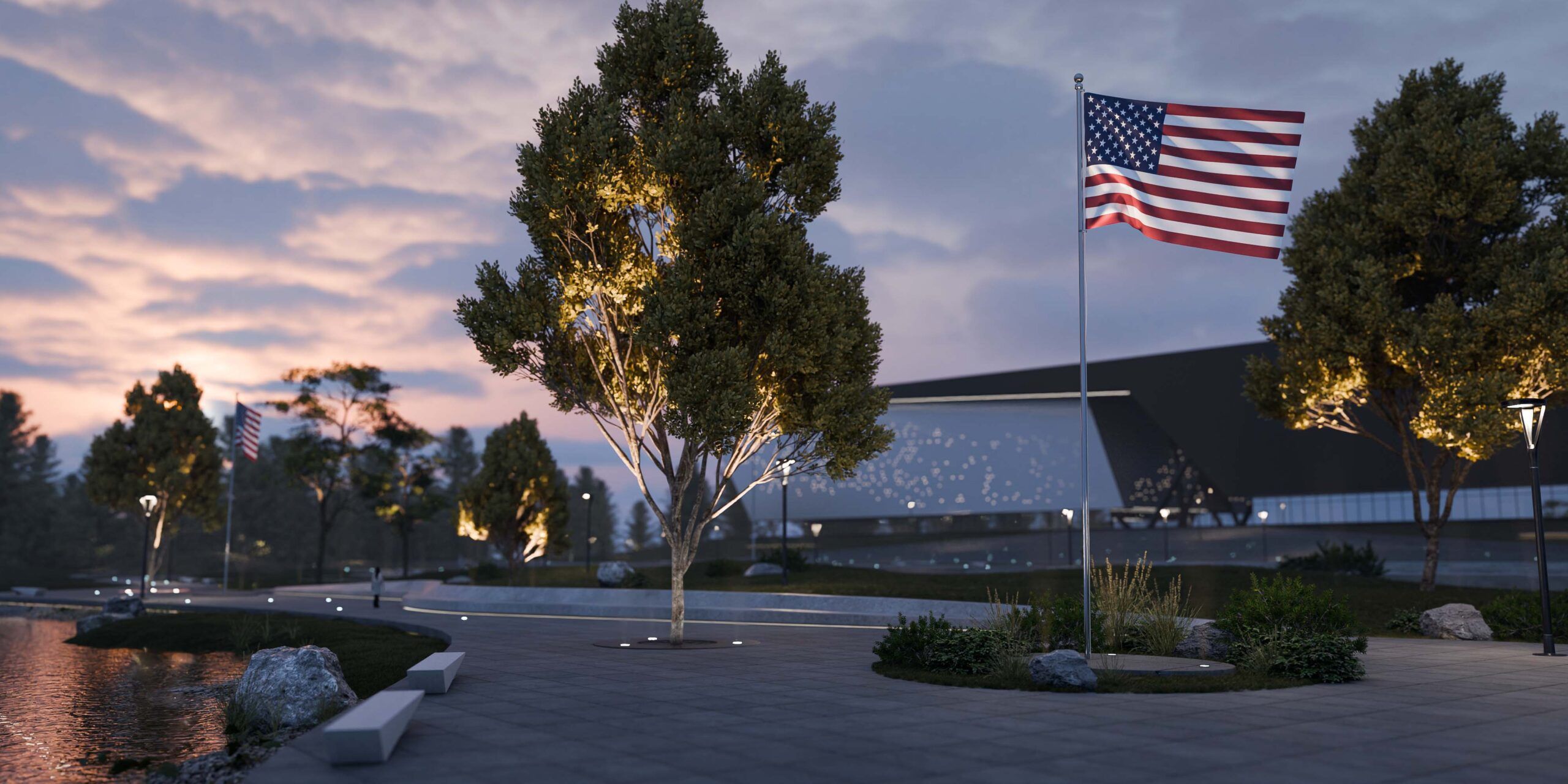
Two to three fixtures should be installed around three feet from the flagpole, and directed toward the top of the pole. For taller poles, the light fixture should be set back from the pole ⅕ of the pole’s total height. The minimum level of illumination on the flag should be 3 footcandles of vertical illumination and 10 footcandles of horizontal illumination. Lighting fixtures producing 500 to 2000 lumens are considered ideal with narrow beam spreads ranging from 10-25°. This calculation is based on flagpoles ranging in height from 10 to 25 feet.
IES RP-43-22 – Lighting exterior applications, an American national standard
While RP-43-22 does not prescribe specific illuminance target values, it does suggest that the flag be illuminated with sufficient vertical illuminance to ensure visibility, color recognition and uniform appearance. In practice, designers often translate this into vertical illuminance targets in the range of approximately 15–35 footcandles, depending on context.
Alcon Lighting’s footcandle recommendation of 15–35 footcandles is derived from Industry practice and designer heuristics, which include: older IES guidance documents, exterior accent lighting norms and experience with visibility thresholds for colored objects at night.

- The flag should be clearly visible at night
- Colors should be recognizable and distinguishable
- Lighting should provide adequate contrast with the background
Recommended beam spread and lumen output
Flags that are higher and larger may require up to 10,000+ lumens. However, jurisdictional regulations should be consulted, as some areas limit the maximum lumen output allowed. 80 CRI light sources are sufficient for flag lighting, and high-90 CRI (color rendering index) light fixtures make the flag’s colors appear even more accurately.

Fixture types for flagpole illumination
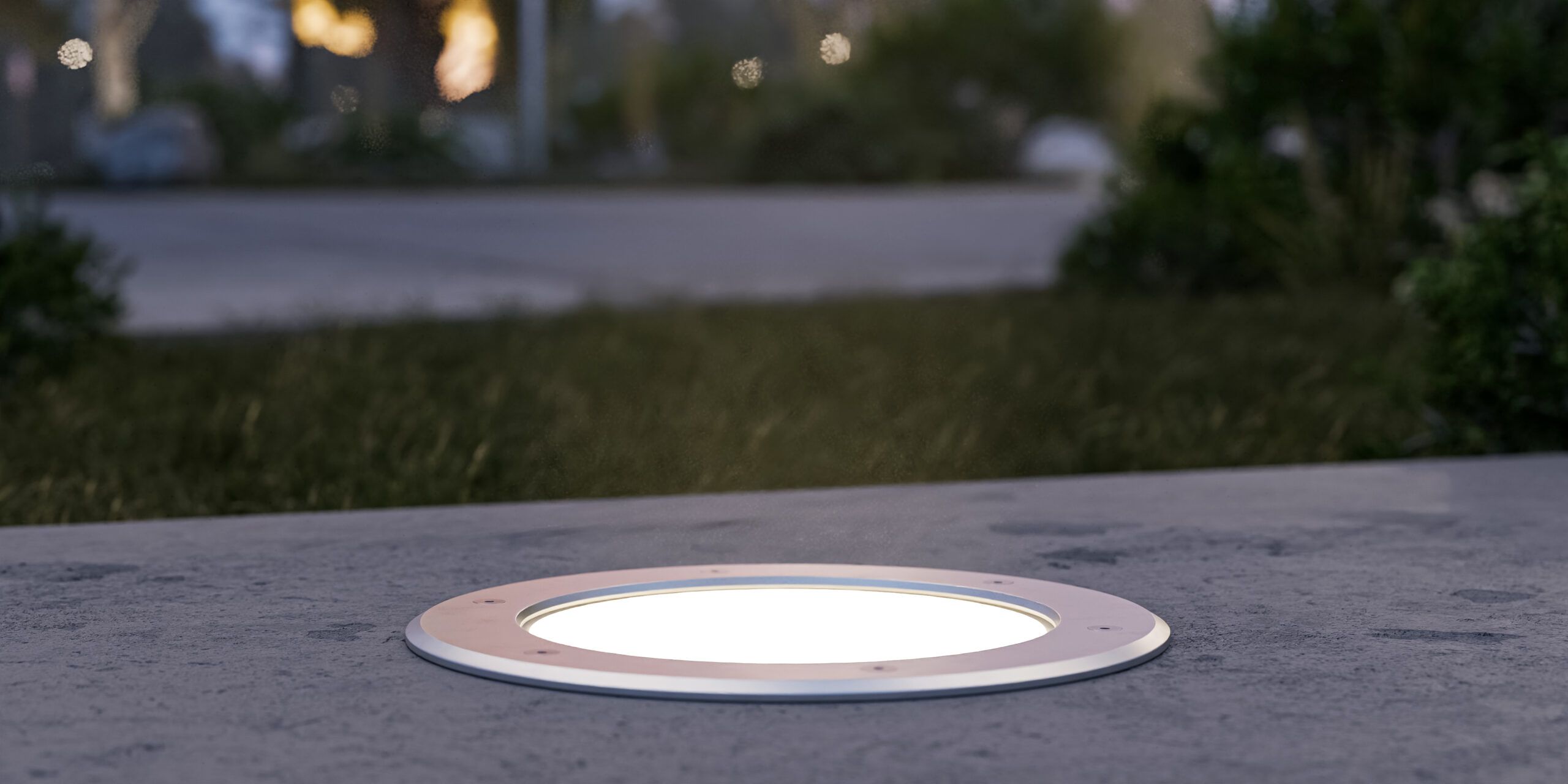
Outdoor fixtures such as Alcon’s 10” In-Ground Uplight provide 25-degree beam spread options, and also have ecologically friendly lighting CCT options for coastal areas. These in-ground fixtures have a minimal aesthetic and are walk-over safe. Alcon Lighting also offers many standard landscape lighting fixtures suitable for flag lighting at the desired illumination level. Their Flag Pole Light is perfect for illuminating taller flags. Illumination can always be adjusted down with a manual dimmer.
Most American flags measure up to 4 x 6 feet. Displaying larger U.S. flags, such as those that measure 6 x 10 feet, may mean using three fixtures. Note that when America’s flag is displayed either horizontally or vertically, such as on a wall, the Union (the blue field) is best displayed to the observer’s left.

[…] Not yet. Though recently, there was a customer who wanted to light the flag, trying to figure out options. They didn’t wanna put anything above ground, so you know we […]