

Last updated on August 13, 2026 9:57 am
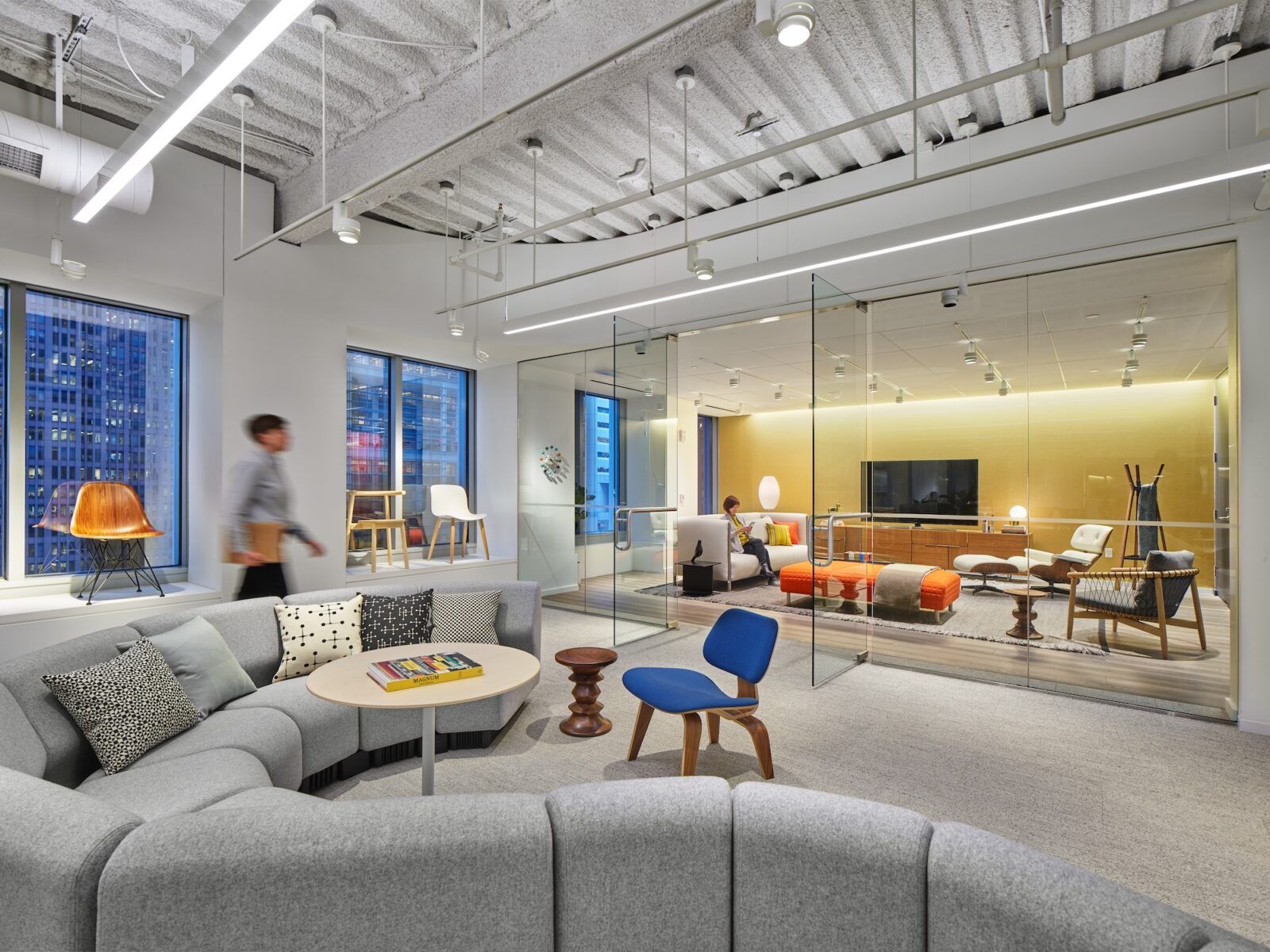
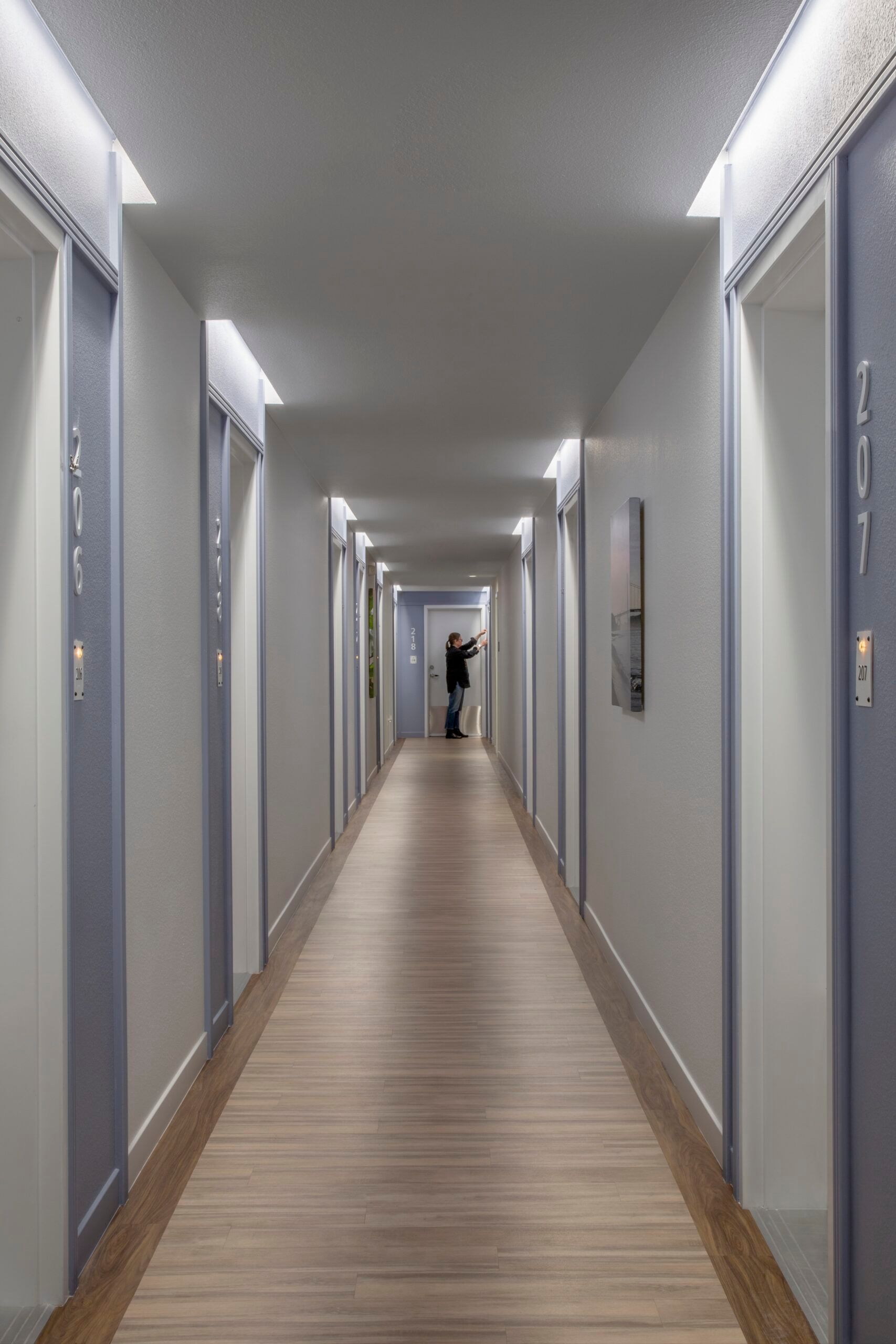
Simply put, uplighting is any lighting that shines upward. Most commercial lighting pendants are designed with uplighting and downlighting capability. For interior applications, uplighting reduces ceiling dark spots and shadows while affording the user additional, glare-free indirect lighting.
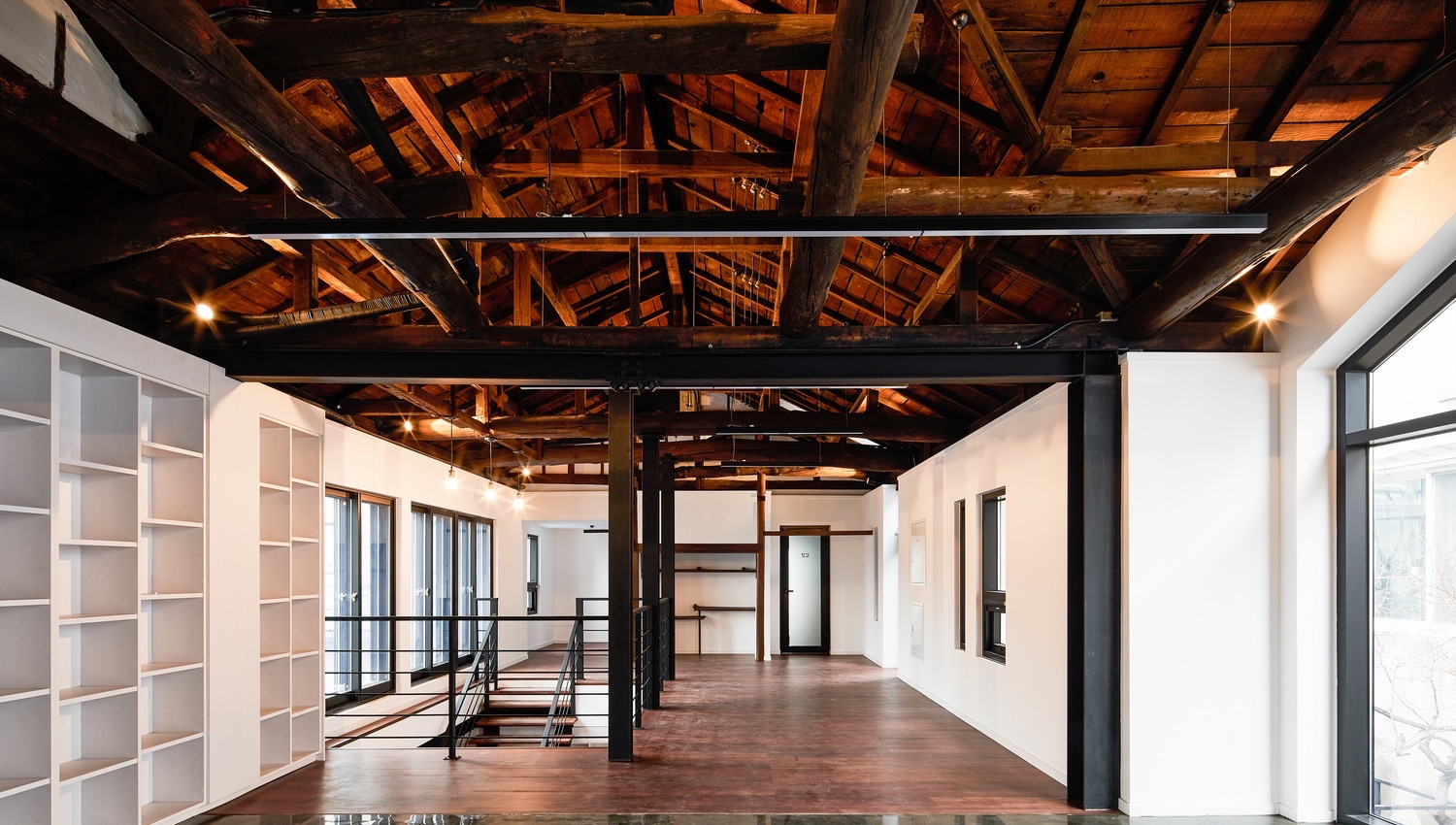
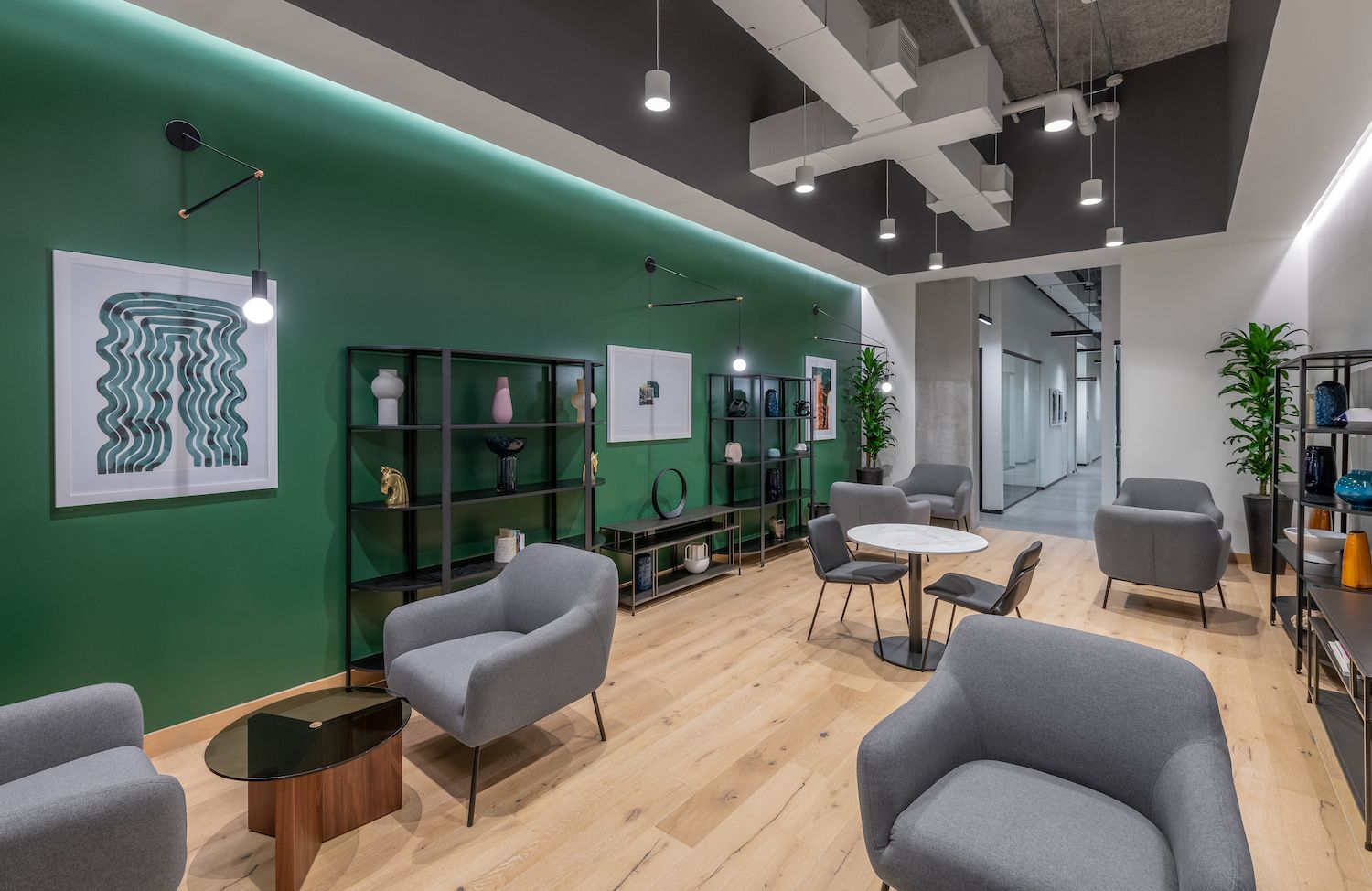
Uplighting supports the architectural design of a space by highlighting features such as beams, pipes, and other distinctive ceiling elements. It also contributes to the overall indirect lighting strategy, helping to reduce glare and create a softer, more even distribution of light throughout the space.
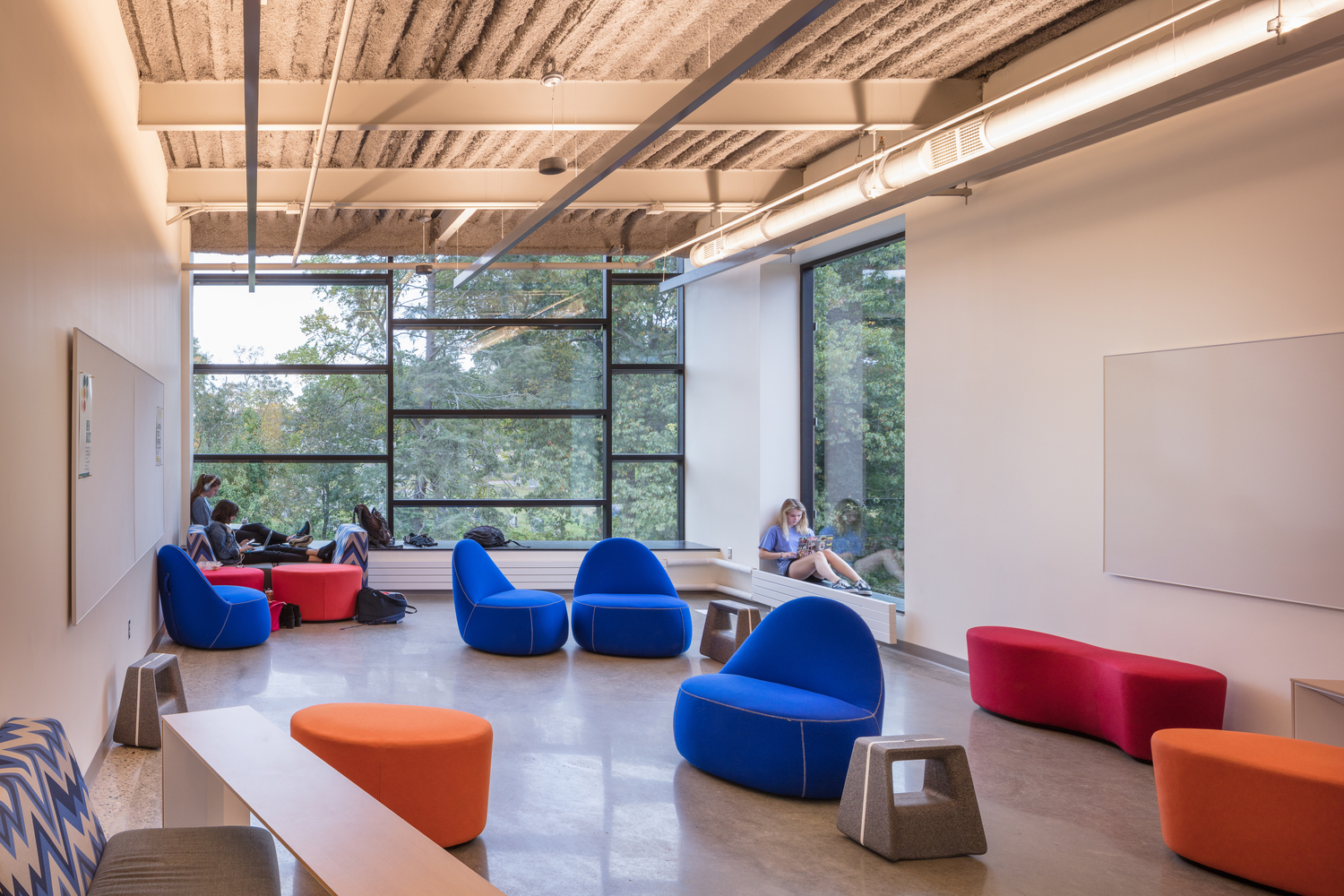
Indirect lighting refers to any light that reflects off a surface—typically a ceiling, wall, cove, or fixture-integrated reflector—before reaching the intended work plane or target plane.
The Distinction: Uplighting vs. Indirect Lighting
Uplighting and indirect lighting are often used together, but they describe different characteristics of a lighting design. Uplighting describes the direction in which light is emitted: upward. Indirect lighting describes how light reaches the intended plane: by reflecting off another surface before illuminating the space.
An uplight directed toward a ceiling can provide indirect ambient illumination, distributing light more broadly throughout a room while helping to reduce direct glare. But uplighting is not inherently indirect. An uplight aimed at a beam, column, textured ceiling, or other architectural feature enhances the character or a space even when it’s primary purpose is to support the general lighting plan.
Indirect lighting however doesn’t have to originate from an upward-facing fixture. Concealed coves, wall-integrated luminaires, and integrated light fixture reflectors redirect light from multiple orientations, using reflected light to illuminate the space.
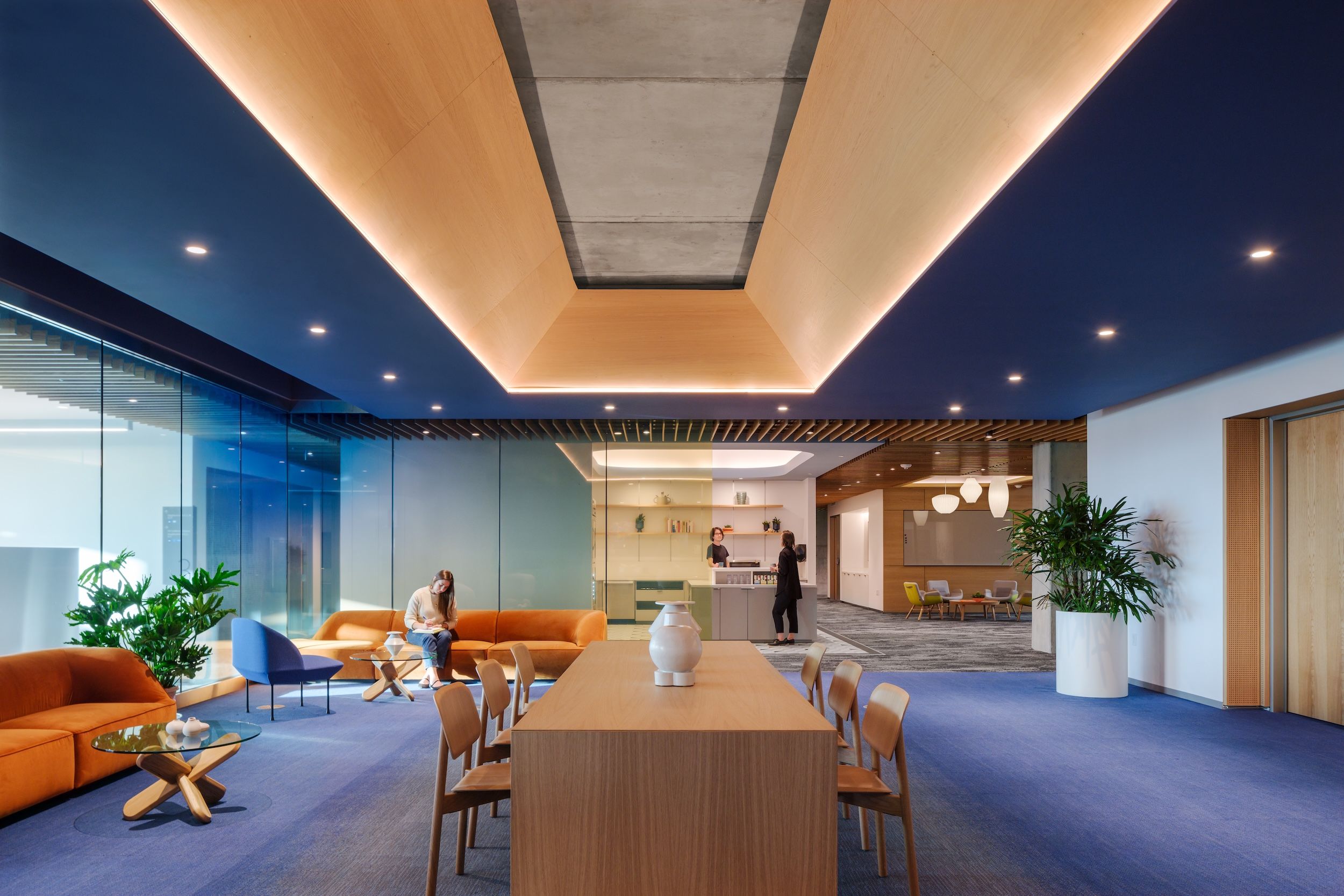
In practice, designers use uplighting to reveal architectural form, shape the upper volume of a space, or create visual emphasis. They use indirect lighting to deliver diffuse ambient illumination that supports the general lighting footcandle targets of a space.
In an IES article on indoor sports lighting, Mary Helen Sprecher highlights the value of indirect lighting in sports venues where glare control and uniformity are priorities. She writes, “Indirect lighting, or uplighting, involving the installation of fixtures aimed at a highly reflective ceiling, provides the least amount of glare and produces very uniform illumination.
Sprecher also notes that “the indirect component of the lighting system makes the facility appear spacious and open by adding luminance to the ceiling and upper walls,” while enhancing the uniform distribution of light. However, indirect lighting alone can provide limited modeling—an important consideration when athletes need to judge a ball’s speed, direction, or spin. For that reason, Sprecher concludes that “the best combination of performance characteristics is supplied via a direct/indirect system.”
Alcon Lighting asked Marras Lighting Design co-founder Jon-Carlo Marras and Gensler Sustainable Design Director Anthony Brower about the effective use of both uplighting and indirect lighting.
Marras, who led projects for Yale Moyer Lighting, a residential landscape lighting firm in Southampton, New York, co-founded Marras Lighting Design in 2013. Brower’s work encompasses Gensler’s market and includes a focus on office buildings, education, civic and culture, mixed-use, sports and media projects.
Both were interviewed by telephone. This is an edited transcript.
Alcon Lighting: What are some benefits of uplighting?
Anthony Brower: The big benefit is giving a softer light. Softer light is easier on the eyes.
Jon-Carlo Marras: One of the most obvious benefits is that you don’t have any glare. The light source faces away from, rather that toward, the viewer. So surfaces are above you, which helps you enhance the feel and space of the room and make it feel larger. Depending on the type of fixture it is, indirect lighting can help create a linear profile on the wall, so the fixture can create its own silhouette. You can light a space really well with a lot of light—spread over a large surface area in the room. It can really create a bright space.
Alcon Lighting: Which applications use indirect lighting most?
Jon-Carlo Marras: Office spaces use it a lot because it minimizes the glare and makes an easier, more comfortable working environment.
Anthony Brower: I see it most often in conference rooms and meeting spaces.
Alcon Lighting: What is the minimum recommended distance suggested between fixture and ceiling for indirect lighting?
Anthony Brower: Multiple factors are involved like lamp and fixture photometrics. Is it a wall or pendant fixture? Is the space an open office or a hospital? How far away from the ceiling is it?
Jon-Carlo Marras: If we’re talking about an ambient lighting effect, I would say it’s about a foot. But it really depends on the fixture and how wide the angle is—what type of optics it has.
Alcon Lighting: Is there a fixture-to-ceiling distance ratio based on the ceiling height of a room?
Anthony Brower: Generally, 12 to 18 inches away from the ceiling is the bare minimum but the ratio really depends. As a general rule, 12 to 18 inches is a legitimate starting point. But you need to ask what light quality do you need? Are the [inhabitants] reading — are they drawing? — are they walking around — or performing surgery?
Alcon Lighting: Do you see an application that would do indirect only?
Jon-Carlo Marras: Yes, though it depends on the client’s budget. If you have a white or a lighter-colored ceiling and you want to get a lot of bang for your buck, it can can be useful. As a lighting designer, I prefer to have multiple types of lighting. I go by the principles of Richard Kelly (1910-1977), one of the modern-day pioneers of lighting design. He said that varied lighting is better because you want to have ambient luminescence, focal glow and plays of brilliance. When you get to do a project that allows you to work with all three — ambient luminescence for a general effect, focal glows for accent, plays of brilliance for sparks like a micro-pinpoint or highlighting a chandelier — they balance one another for an amazing environment.
Alcon Lighting: Should indirect lighting serve as general lighting and then get coupled with task lighting?
Anthony Brower: We have used this in the past and some refer to it as a coupled Direct/Indirect “Tambient” system. In our Los Angeles office, we have moved lighting from the overhead ceiling grid and packaged it with the furniture system. In this manner we achieve several goals.
Moving the lighting closer to the user allows us to reduce the wattage to plug loads related to lighting systems. Our Tambient system combines indirect lighting and a furniture system with two power poles on either side that go up and arc up to the ceiling and then down below. To provide 35 lumens at the desktop at eight, nine or 10-feet, I would usually need to provide an 80-watt lamp. But with the Tambient system, I may only need a 20-watt moving lamp, so it’s a great system — you get great quality light for less wattage but more power. That’s the real benefit.
With task lights on desks, you need more light for a higher level of contrast. Some people may need a task light but the power in using a task light for helping improve overall building plug load — an owner will have that designed into their space — the real power to using task light is to incorporate using enough light into your work. Older workers and young workers have different lighting needs. The total ambient load for the building should be balanced. It’s a generational divide.
Alcon Lighting: Are there downsides to using indirect lighting?
Jon-Carlo Marras: Yes. [With indirect lighting] you don’t have great control of the room — it’s going to create more of that ambient luminescence, so you can lose that sense of control. If you have indirect lighting that’s very powerful you can have enough light for specific tasks, such as reading. But it’s not ideal for reading.
Alcon Lighting: So then, should indirect lighting serve as general lighting and then get coupled with task lighting?
Jon-Carlo Marras: Absolutely—yes.
Conclusion
A common mistake in commercial lighting design is relying too heavily on direct lighting. The strongest lighting strategies combine direct and indirect illumination, using each where it performs best. Indirect light can turn a ceiling into a broad, low-glare source that makes a space feel brighter, more open, and more uniform, while a direct component restores the modeling and visual definition needed for a specific task. The result is not simply a better-lit space, but one that supports comfort, performance, and the architecture itself.

[…] draws attention toward or away from certain product displays, work projects or spaces. The use of indirect uplighting or downlighting with accents, for ambience, general lighting, or for overall brand clarity and […]