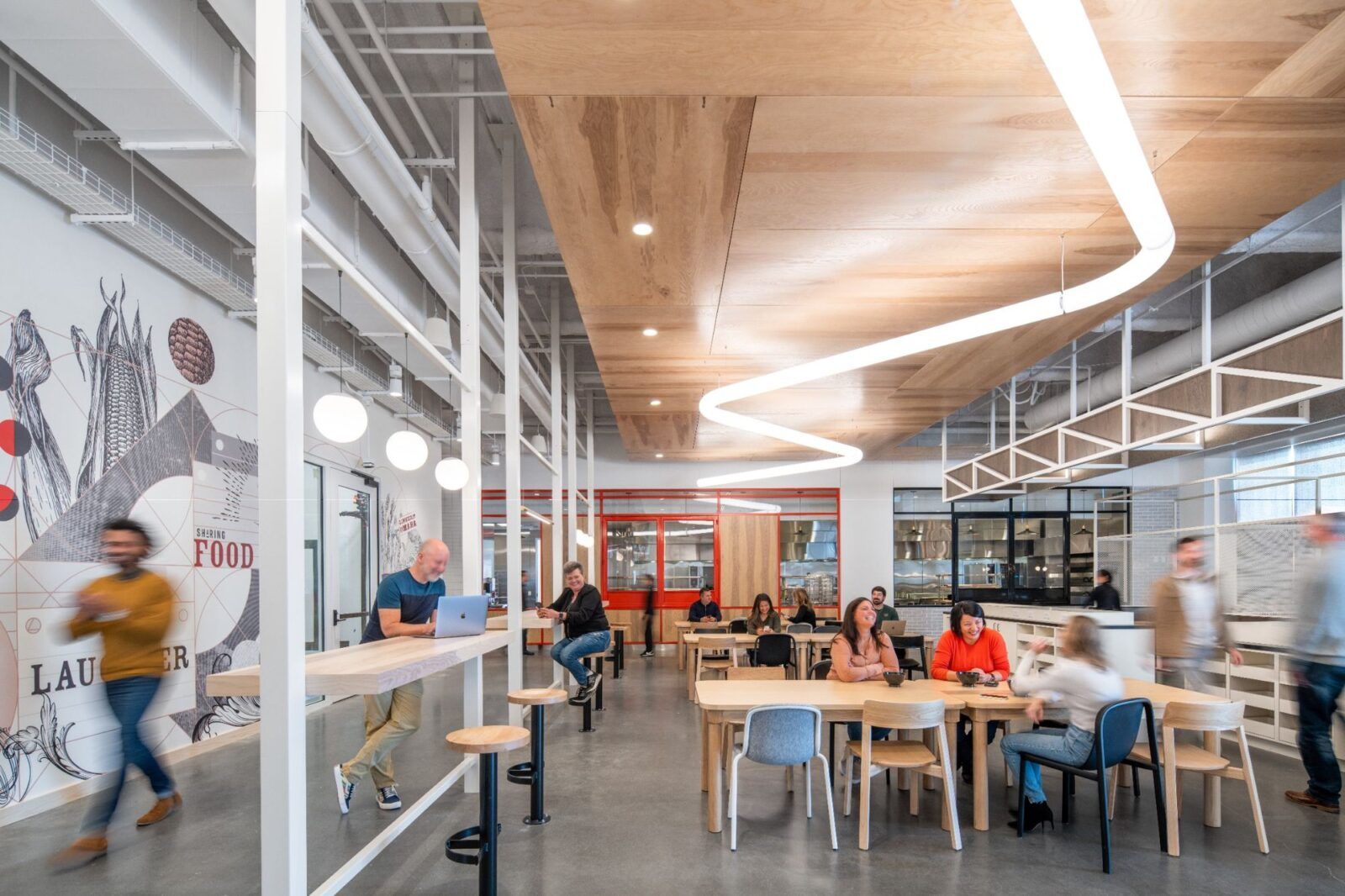

Last updated on January 21, 2026 1:25 pm
The design of workspaces in 2026 reflects a growing focus on self-expression and customized experiences as patterns of remote and in-office work continue to evolve. In response, minimalism no longer carries the same appeal it once did, giving way to interiors that express more character and depth. Lighting plays a key role in this evolution, offering color tuning and intensity control to create spaces that feel more responsive and human.
The workspace, as it was once known, has changed, and designers have reached a turning point where design can help ease the tension of employees returning to physical offices after working from the comfort, privacy and peace of home offices. The goal is to help these employees return, not out of obligation, but because commercial office spaces have become worth the daily journey, hopefully superseding their home offices and becoming an oasis rather than a cage.
Post-pandemic workers value aesthetic updates such as luxurious textures and curvaceous, organic forms that keep spaces interesting yet personal. Such updates feel inviting rather than alienating in commercial environments that previously featured more rigid lines, sterile surfaces and a minimalism that often felt suffocatingly communal. With rediscovered intricate detailing, designers aim to add a touch of personalization for employees, some of whom are returning to the office reluctantly.
Let’s be honest: No one wants to commute for an hour to spend nine hours working in a space that feels impersonal and chaotic, only to commute home yet again. Previous approaches to commercial interior design were intended to create collaborative environments, but in many cases, this ended up stifling creativity and autonomy. People felt like a cog in a wheel. Then, after the pandemic hit, people got accustomed to working from home—collaborating and expressing themselves on their own terms. Now, they are being told they must return, which is a big ask.
The workspace of the future has to, at the very least, offset what employees will miss by returning to the office. The designers and architects of this post-pandemic world must develop creative solutions for spaces where people can work, play and collaborate while maintaining some level of individuality.
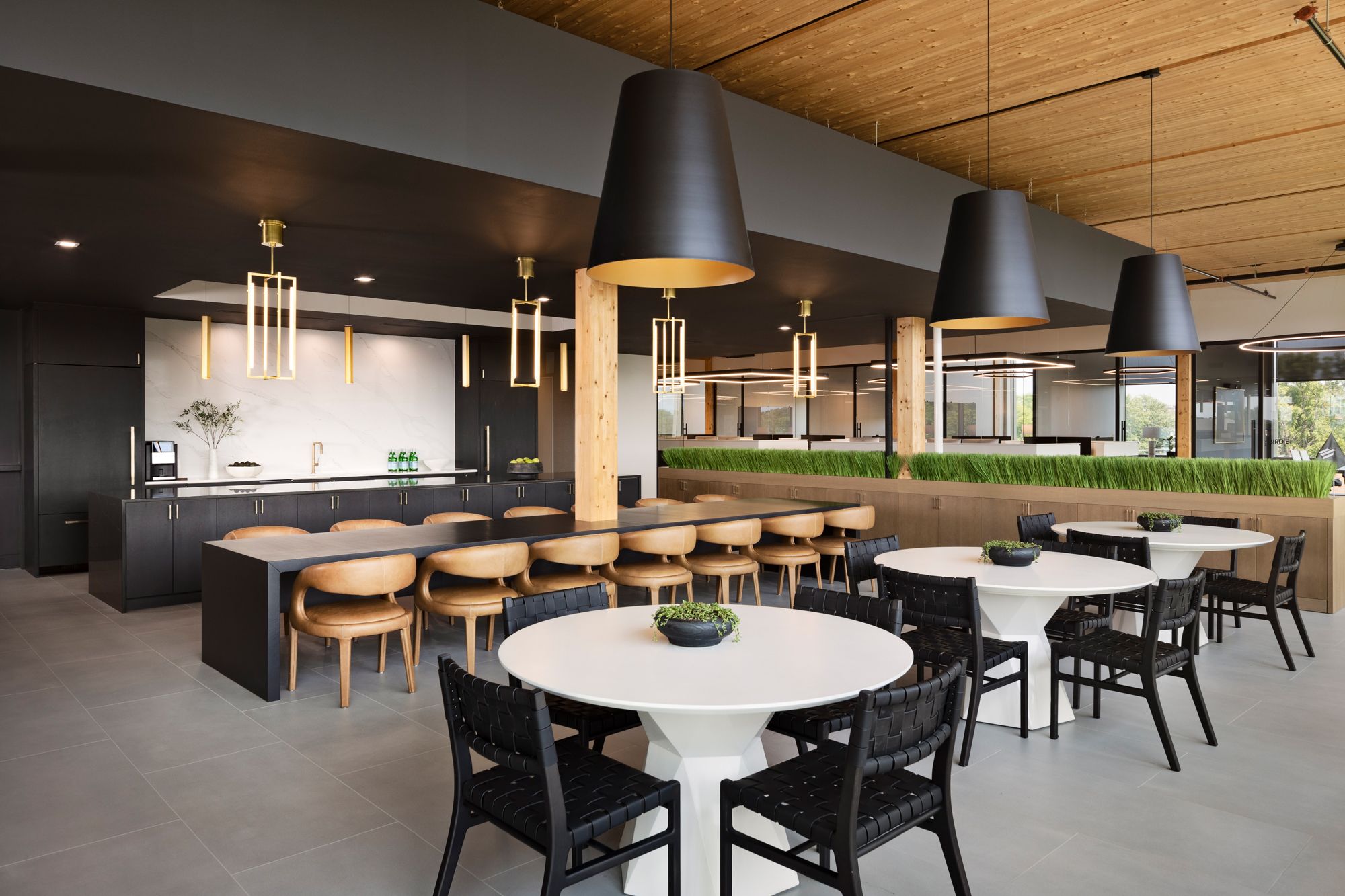
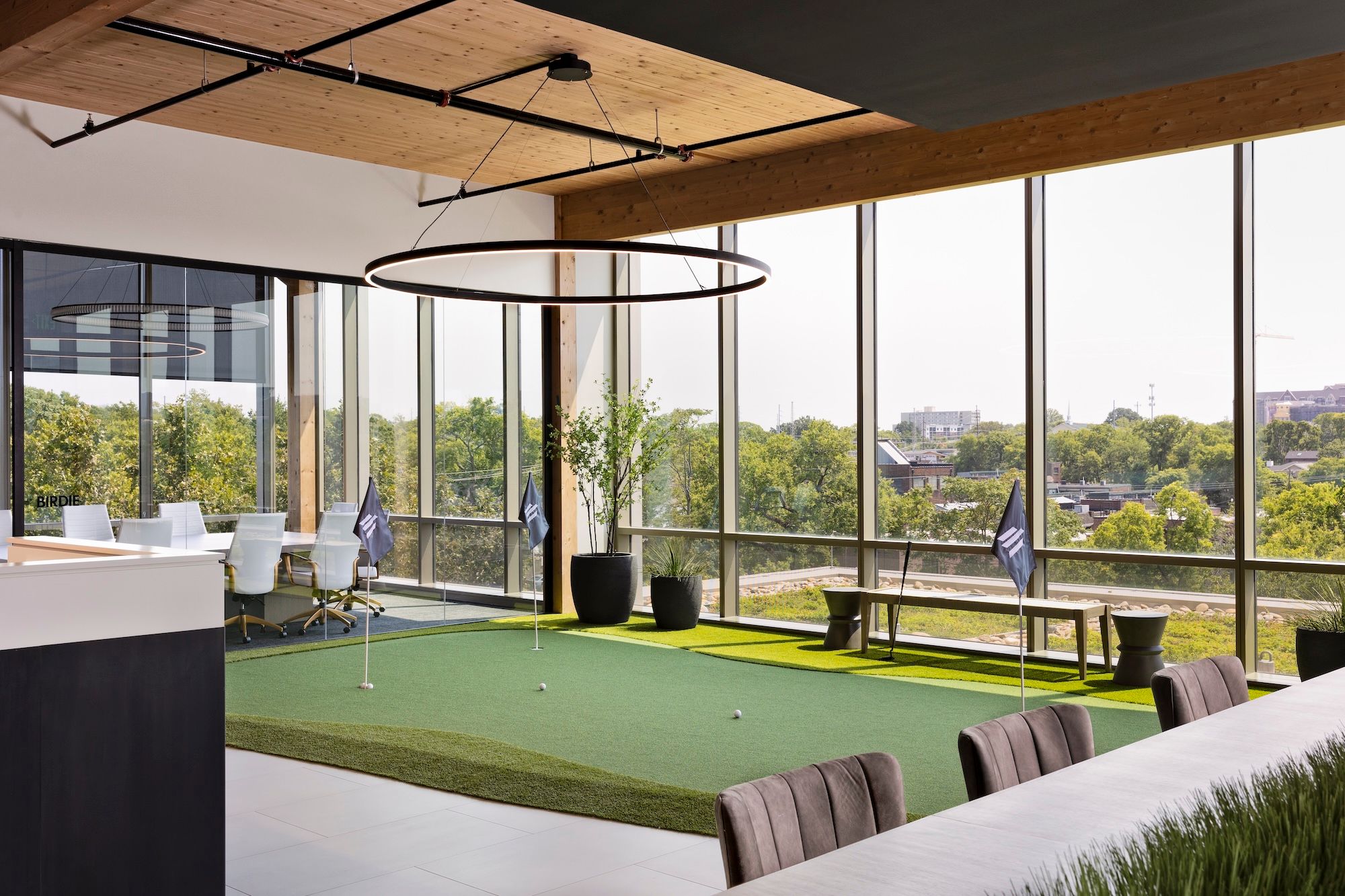
Table of contents
- Regenerative radiance: Lighting and materials that heal
- Biophilic lighting systems and natural rhythms
- Sustainable architectural surfaces and finishes
- Sentient atmospheres: AI-driven lighting that adapts
- Dynamic lighting for productivity and mood
- Neo-biomorphic forms: Organic shapes in architecture
- Rounded furnishings and architectural curves
- Multi-sensory layering: Designing for all the senses
- Soundscaping and scent integration in offices
- Creating immersive, sensory-rich environments
- Conclusion
Regenerative radiance: Lighting and materials that heal
Modern commercial spaces have to evolve beyond basic functionality; there’s no way around it when asking people to change their entire way of living and working. The year 2026 marks a new era when lighting and materials do more than just look good—they must support workers physically and mentally, as well as our planet’s ecosystem, which will suffer under the increased carbon footprint of millions of people commuting back into offices. At the very least, our built spaces have to nurture people and simultaneously reduce the unavoidable strain on the planet.
Biophilic lighting systems and natural rhythms
Lighting science now reaches way beyond basic illumination. Modern biophilic lighting systems align with the natural progression of daylight and help our bodies’ internal clocks stay in balance. These systems create light that changes color temperature throughout the day to help our natural circadian rhythms—cool, energizing light brightens mornings (5000-6500K), balanced white light fills mid-day (4000-5000K), and warm, relaxing tones emerge by evening (2700-3000K). This natural approach boosts alertness during work hours and helps us relax as the day ends, so the drive home feels a little kinder on the nerves.

Sustainable architectural surfaces and finishes
In today’s world, a company’s success in attracting top talent hinges on how well it looks after its employees and addresses environmental issues. Companies now frequently seek certifications to demonstrate their commitment—which is why LEED and BREEAM certifications, which show environmental responsibility, and WELL and Fitwel certifications focus on human wellness—are so critical to retooling modern workspaces. People working in WELL-certified spaces report a remarkable 26% boost in overall wellbeing, which is significant.
Sentient atmospheres: AI-driven lighting that adapts
Advancements in office lighting technology have reached levels that were unimaginable when we were all last in our cubicles. AI-driven adaptive systems can now respond to our emotional states and environmental conditions. Think of it like the mood ring from the 70s, but on steroids. These systems create what designers call “sentient atmospheres,” spaces that react with our bodies naturally; it’s technology at work in the background to improve human well-being.
Today’s advanced AI lighting doesn’t just light up the room; it watches and adapts to occupants in a surprisingly intuitive way. These systems collect biometric data using sensors that monitor physical responses to environmental conditions. AI algorithms can help decode a person’s emotional state by tracking everything from heart rate to temperature and ambient light. The technology goes beyond simple motion detection: Advanced systems can recognize facial expressions, body language and subtle biometric signals that show stress or focus. These systems create personalized experiences that feel natural to each user.
Dynamic lighting for productivity and mood
Most designers know that light substantially affects a person’s circadian rhythm, so adjusting light temperature throughout the day can help improve well-being and productivity, which can, in turn, improve the bottom line for the employer. For instance, a National Institutes of Health study revealed that dynamic lighting boosts afternoon alertness when productivity typically declines. Cool, blue-enriched light helps focus and reaction time, while warmer light helps relaxation.
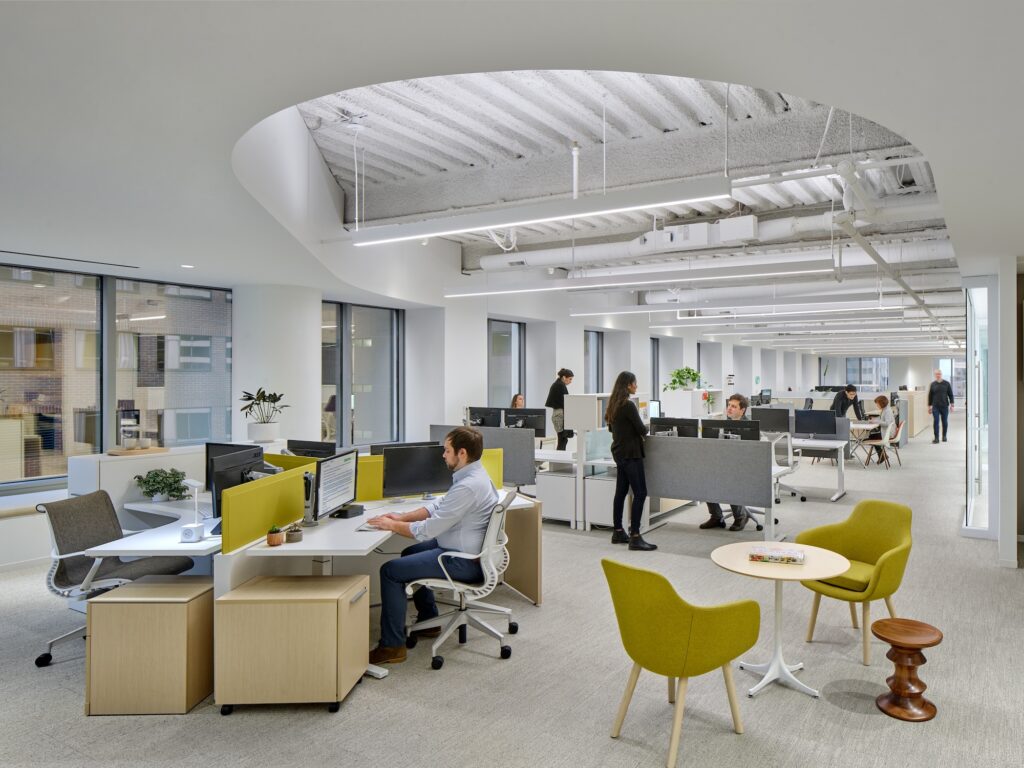
How does it work? Similar to above, AI algorithms, connected to sensors, track an occupant’s emotions and adjust color temperature throughout the day. Generally, the system will use cooler temperatures in the morning to increase alertness, then shift to warmer evening tones to support relaxation and melatonin production. These adaptive systems learn users’ priorities over time and automatically make precise adjustments.
Neo-biomorphic forms: Organic shapes in architecture
Curves will revolutionize commercial design in 2026, bringing significant psychological changes to workspace architecture. People naturally gravitate toward curved spaces rather than angular ones. The anterior cingulate cortex—a brain region connected to emotions and rewards—becomes active when we see curves. This biological response makes organic forms feel safe and welcoming in professional settings.
Rounded furnishings and architectural curves
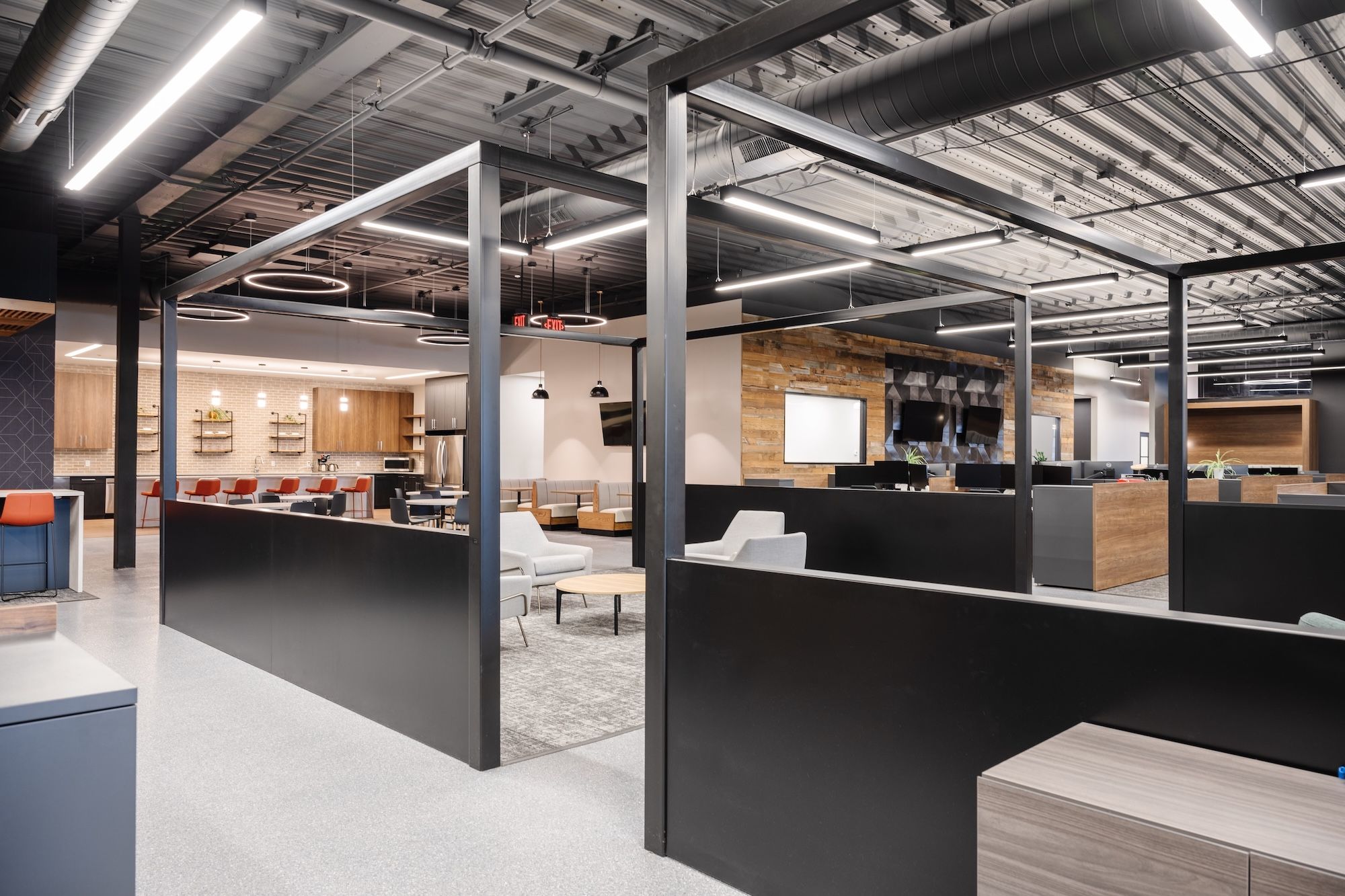
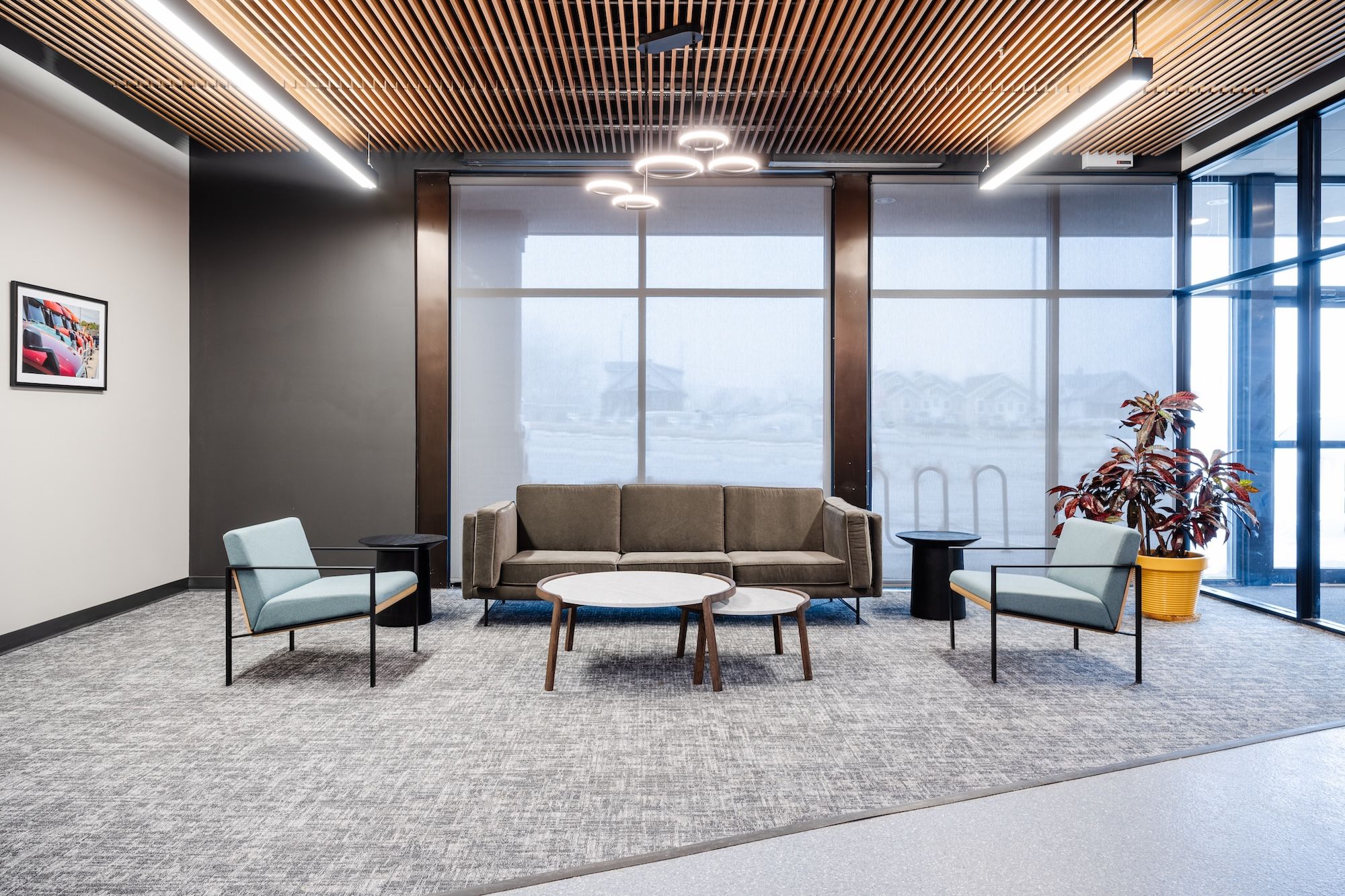
Rather than cold, hard lines and open configurations, flowing forms disrupt the traditional office layout. Rounded furnishings such as sofas and conference tables encourage more equitable conversations. Doorways with arches and gently curved walls serve as subtle wayfinding cues.
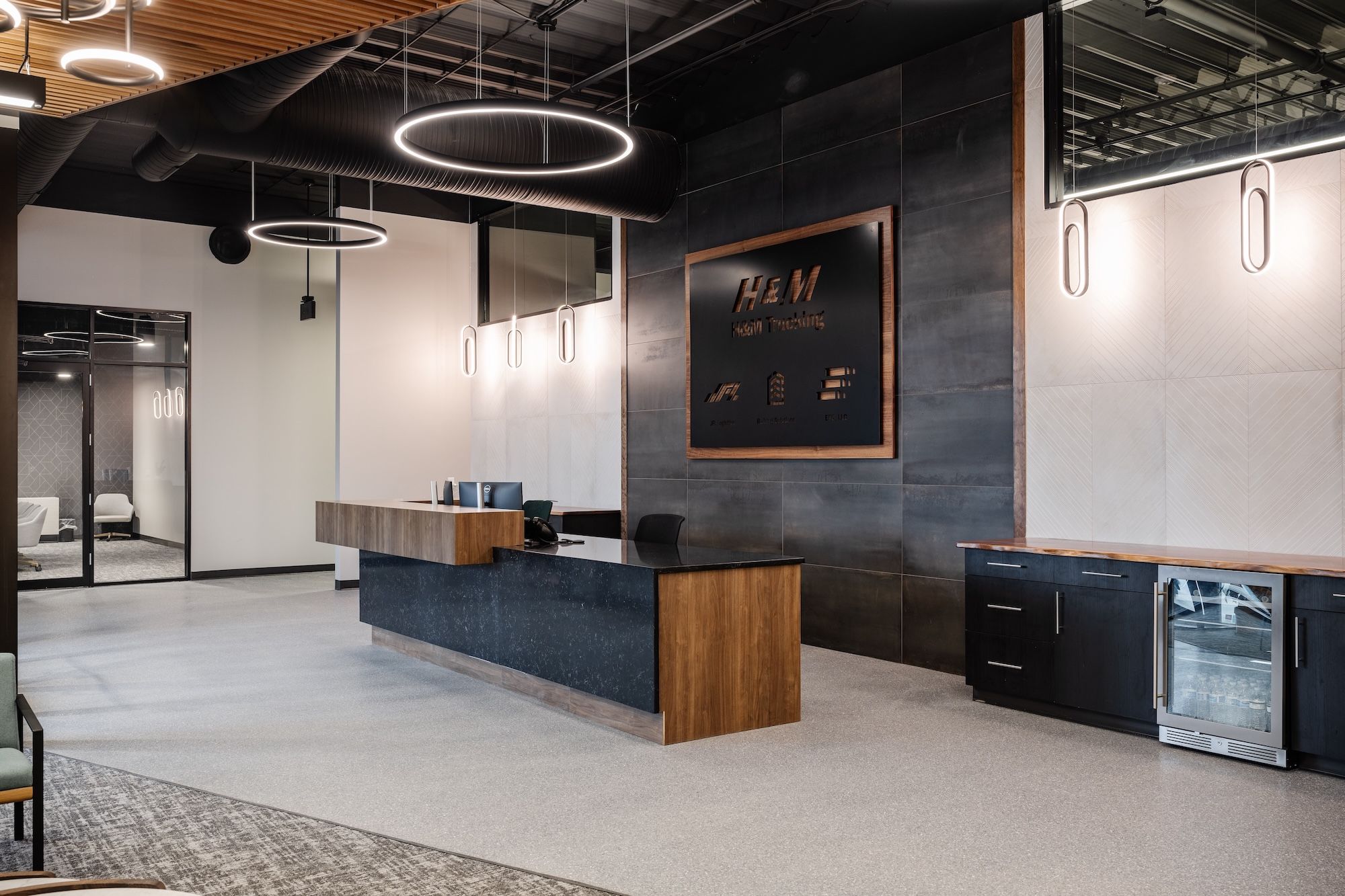
Architectural details can also incorporate biomorphic principles through sculptural elements—for example, millwork with organic cutouts and flowing lines, inspired by bee colonies and Voronoi structures. Exposed tactile timbers, stone-inspired surfaces, and soft-matte finishes combine to create a multi-sensory experience. These design moves represent a deliberate step away from cold commercialism toward spaces that feel more human, nurturing and emotionally connected.
Multi-sensory layering: Designing for all the senses
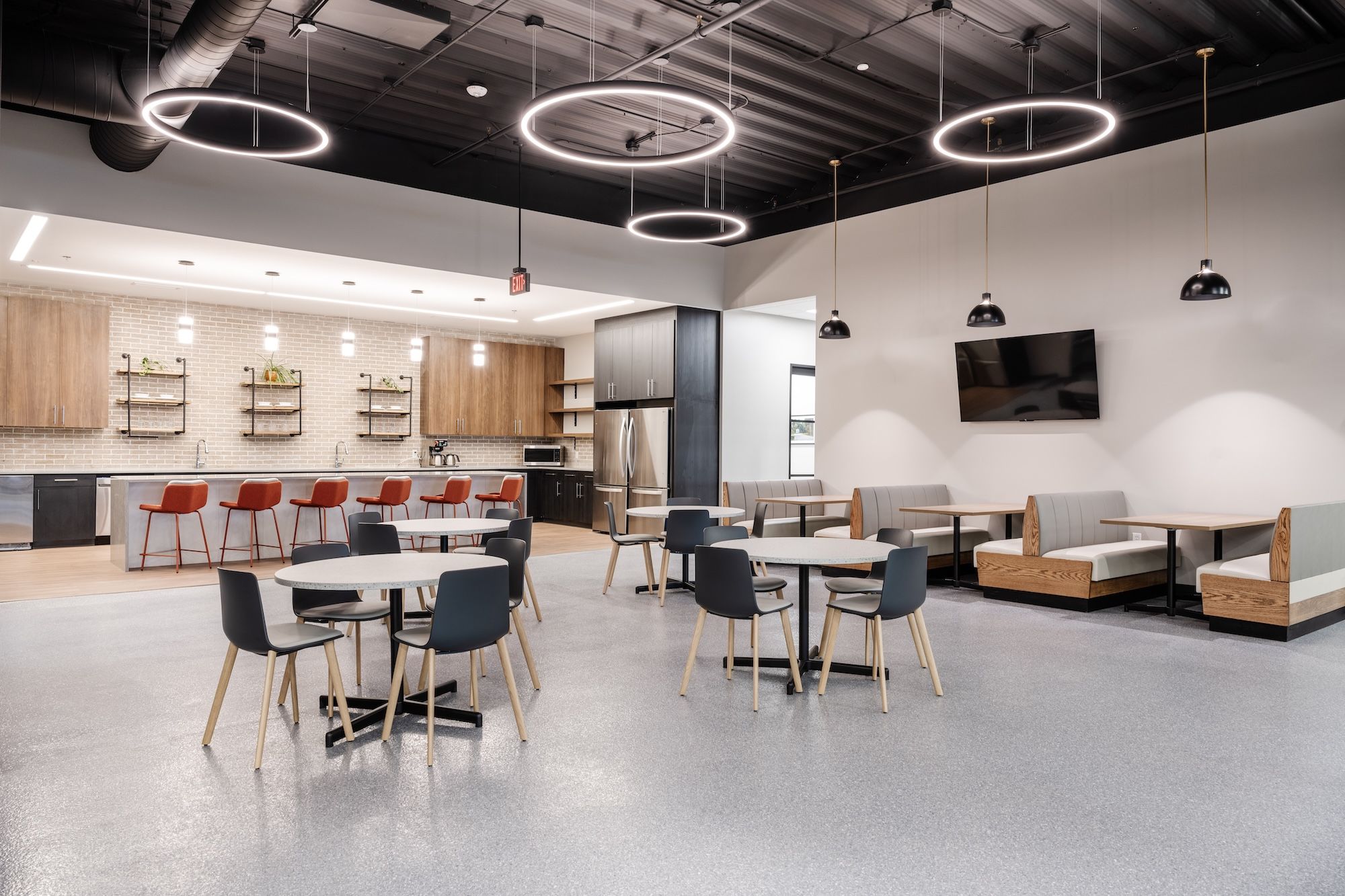
Designers of commercial workspaces now aim to appeal to all five senses to create deeper, more meaningful environments. The human experience goes beyond visual elements to include touch, sound, smell and how they work together.
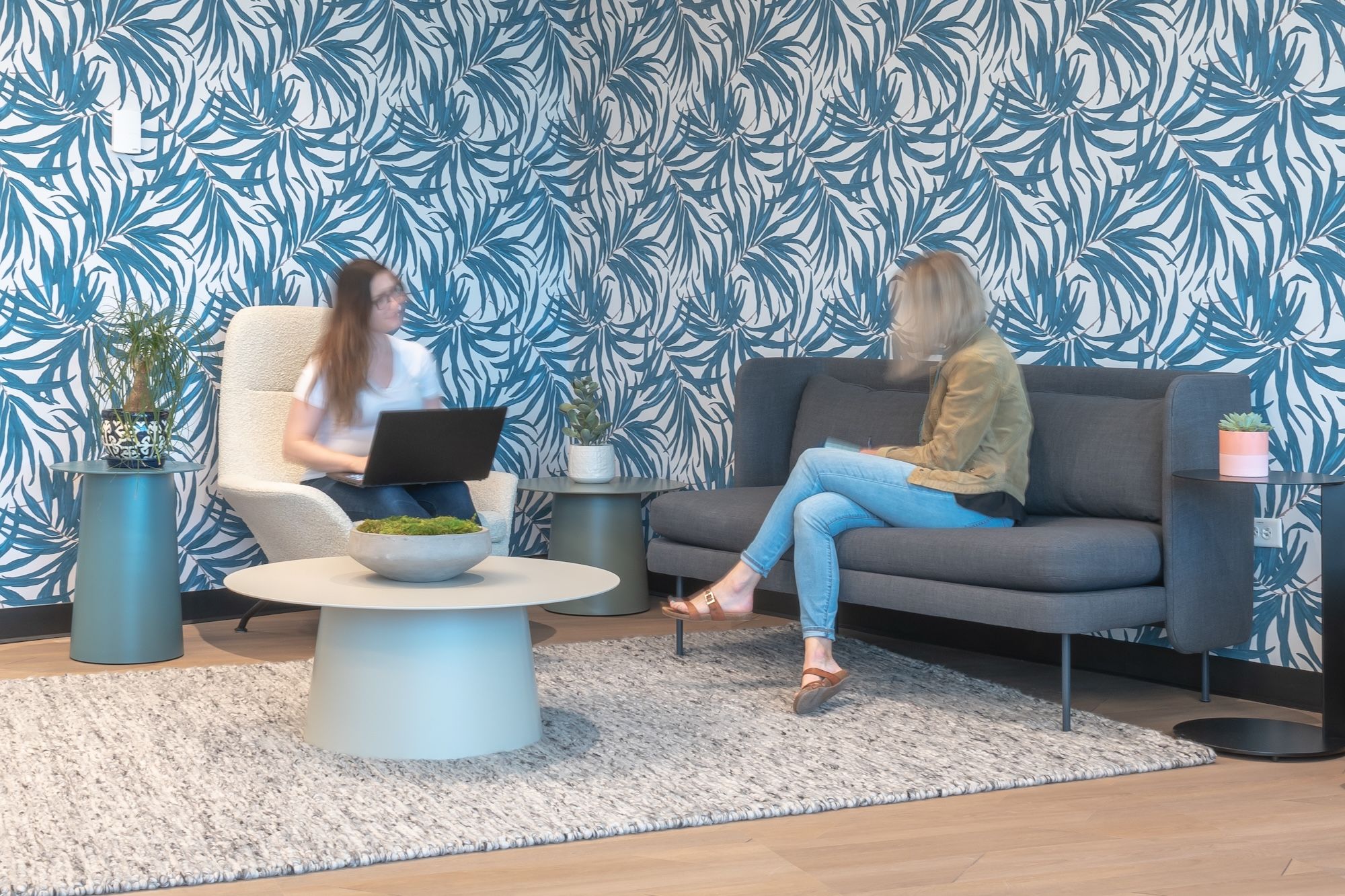
Materials such as velvet, wool, rattan and linen add depth and dimension, creating a more pleasing tactile experience. They create visual richness while inviting physical interaction. Each texture triggers specific emotional responses—soft velvet brings comfort, while natural rattan evokes a connection to the outdoors. Strategically layered textures create visual complexity without overwhelming the senses.
Soundscaping and scent integration in offices
Noise remains the biggest productivity problem in offices, with 70% of workers citing it as a source of fatigue and reduced performance. When you can’t hear yourself think, it makes it hard to work. Soundscaping—the strategic design and management of sounds within specific environments—has become vital. Acoustic panels, workpods and designated quiet zones can improve acoustic performance and employee satisfaction.
Scent also plays a powerful role in the workplace experience. According to a study by Takasago, Japan’s largest fragrance producer, lemon scents can reduce typing errors by as much as 54 percent. Modern offices now feature subtle “scentscapes” tailored to different zones: Think citrus in focus areas and vanilla in calming spaces.
Smart lighting systems can coordinate with scent diffusers and acoustic treatments to create environments that subtly change throughout the day, supporting different work modes from focused concentration to collaborative activities.
Creating immersive, sensory-rich environments
The bottom line? A multi-sensory approach to commercial/workspace design helps people adapt better to being back in the workplace. Vision is, by far, the most dominant sense for acquiring information in most contexts, followed by hearing and other senses, including touch and sound. Companies that invest in sensory-rich environments have happier, more productive workers. Note that multi-sensory design isn’t about overwhelming the senses; rather, it creates stimulating yet balanced environments that improve the human experience at work.
Conclusion
The return-to-workplace revolution of 2026 redefines what commercial spaces can be. Sterile environments of the past now pulse with life, AI lighting systems respond to our emotional states and biomorphic forms connect to a primal bond with natural shapes. These elements blend together to create spaces that feel almost alive—they breathe, adapt and respond to human needs.
People now linger rather than rush through these new commercial environments. Varied textures make you want to reach out and touch them. Thoughtful soundscaping masks distractions without creating the eerie silence common in offices of the past decade. These spaces offer something remote work never could—a rich sensory experience built for human collaboration and creativity.
The 2026 commercial design world brings striking changes. But thanks to good design, people will choose to return to offices rather than feel obligated. Despite predictions that physical workplaces would become obsolete, we are witnessing their dramatic reinvention. Bold maximalism replaces sterile minimalism. Welcoming curves replace rigid angles and nurturing functionality supersedes cold efficiency.
This remarkable development shows a deeper grasp of human needs. Commercial spaces now support not just productivity but our need for connection, comfort and rich sensory experiences. The pandemic forced people apart, yet it showed what we value most about shared spaces—they engage our senses and support wellbeing at the same time.
Looking ahead, these design trends mean more than aesthetic changes: They signal a complete rethinking of how built environments can heal both people and planet. People are returning to offices not just because of corporate mandates, but because these new and inspired spaces are worth the commute. They improve energy, creativity and sense of purpose rather than depleting them.